
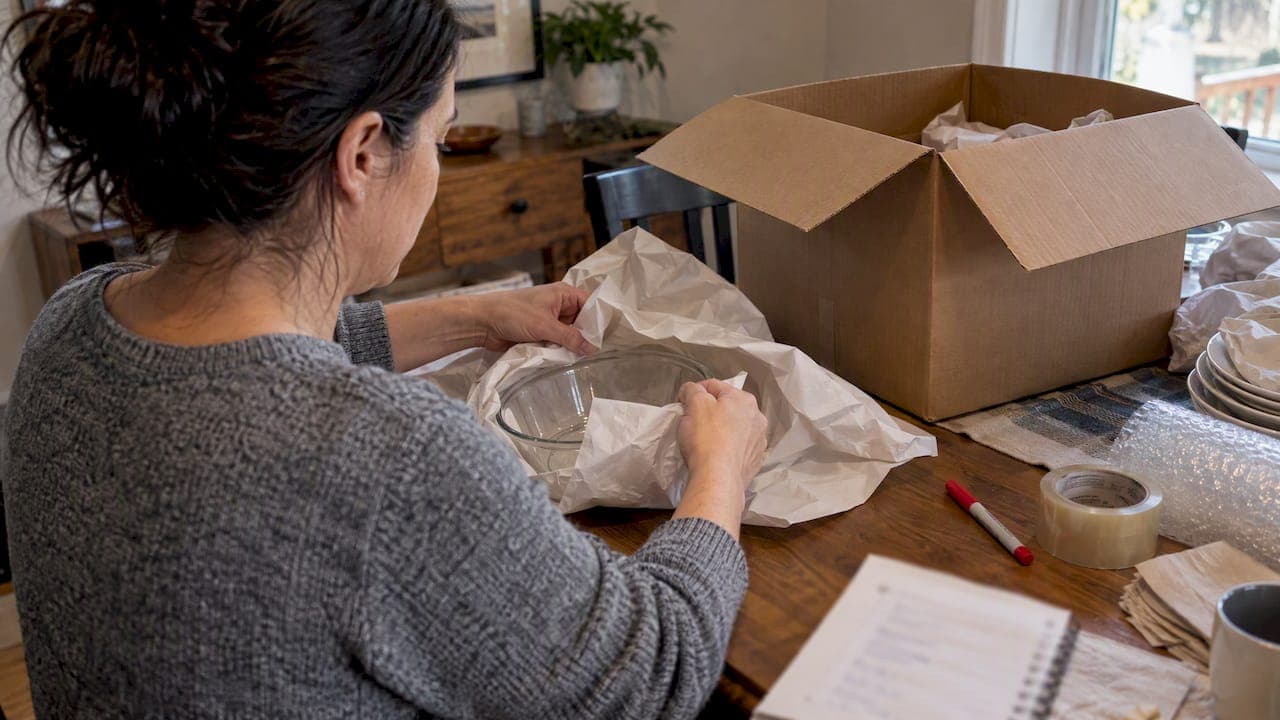
This house moving checklist walks you through every stage of a household move on a week-by-week timeline, covering packing supplies, mover paperwork, valuation protection, and moving-day essentials. You can print it, hand sections to your moving supervisor, or keep it in your essentials bag so nothing slips through the cracks between booking day and the last box.
TL;DR:
- Begin a room by room inventory at least eight weeks ahead, photographing valuable items; fewer belongings can lower truck size, labor time, and cost.
- Four to six weeks out, pack rarely used rooms first and schedule utility transfers, internet installation, and mail forwarding before providers’ notice windows close.
- Released valuation may cover as little as $0.60 per pound, so ask about replacement value protection and how any shipment weight minimum applies.
- Before loading, match the inventory to the bill of lading, confirm charges and valuation, and never sign blank paperwork; record damage before signing delivery documents.
- Keep cash, jewelry, passports, and irreplaceable documents in your own vehicle, since movers may exclude these belongings from standard liability coverage.
Table of Contents
- 1. 8+ weeks before: planning, inventory, and booking movers
- 2. 4 to 6 weeks before: supplies, packing strategy, and service notifications
- 3. 2 to 3 weeks before: confirm logistics, finalize inventory and insurance
- 4. 1 to 2 weeks before: last packing, confirm services, and address notifications
- 5. 1 week and the day before: final checks and last-minute tasks
- 6. Moving day: supervision, inventory checks, and essentials
- 7. After the move: unpack priorities, utilities check, and registrations
- 8. Packing supplies checklist: boxes, materials, and specialty items
- 9. Paperwork and insurance: bill of lading, valuation options, and inventory documentation
- 10. Printable checklist and templates: how to use and download the PDF
- Why professional movers rely on the same checklist habits
- Let us handle the heavy lifting in Abbotsford and the Fraser Valley
- FAQ
- Sources
1. 8+ weeks before: planning, inventory, and booking movers
The earliest stage sets the budget and timeline for everything that follows. Start with a room-by-room inventory, listing items and photographing anything valuable or fragile. The Office of Consumer Affairs notes that a documented inventory before an in-home estimate helps movers quote more accurately and gives you a reference point if anything goes missing or gets damaged.
This is also the point to declutter. Fewer items mean a smaller truck, less labor time, and a lower bill, so sort anything you have not used in a year into donate, sell, or recycle piles before movers ever see your home.
- Walk every room and log items, noting condition and approximate value
- Photograph electronics, artwork, and furniture before they are wrapped
- Choose a move date and request in-home or video estimates from a few movers
- Decide whether you need overlap housing between leases or closings
2. 4 to 6 weeks before: supplies, packing strategy, and service notifications
Once your date and mover are set, shift to gathering supplies and starting the slow packing work. You will need boxes in several sizes, tape, markers, packing paper, and padding for anything breakable, most of which you can collect from retailers, liquor stores, or your moving company.
Pack in order of use: start with the guest room, storage closets, and off-season items, and leave daily essentials like kitchenware and toiletries for the final week. This mirrors standard industry packing order advice and keeps your home livable while you work through boxes gradually.
This window is also when service changes need to go on your calendar, since utility and internet providers may require advance notice.
- Order or collect boxes, tape, and padding materials early
- Begin packing rarely used rooms first, saving essentials for last
- Schedule utility transfers, internet installation, and mail forwarding
- Notify phone and cable providers of your move date
3. 2 to 3 weeks before: confirm logistics, finalize inventory and insurance
With three weeks left, logistics need to lock into place. Confirm truck arrival time with your mover, and if you live in an apartment or condo, reserve the elevator or loading dock and check whether visitor parking needs a permit for moving day.
This is also the right time to finalize your inventory and talk valuation protection with your mover. Released valuation often limits liability to a low per-pound amount, which rarely covers what your belongings are actually worth, so replacement value protection is commonly recommended for anything you would be upset to lose. The Canadian Association of Movers notes that replacement value protection often carries a minimum declared value based on shipment weight, so ask your mover how that minimum applies to your load.
- Confirm truck arrival window and building access arrangements
- Ask your mover to explain released valuation versus replacement value protection
- Label fragile and high-value items clearly
- Plan to transport irreplaceable items yourself rather than loading them
4. 1 to 2 weeks before: last packing, confirm services, and address notifications
With one to two weeks left, most of your home should be in boxes except for what you need daily. Pack a dedicated essentials bag with documents, phone chargers, basic kitchen items, and any medication, so you are never digging through sealed boxes on moving night.
- Finish packing every room except the kitchen and bathroom you are actively using
- Notify your bank, employer, schools, and healthcare providers of your new address
- Update your address with government agencies, including driver's license and health card authorities, following a change of address checklist
- Confirm final paperwork, deposit amounts, and accepted payment methods with your mover
Getting notifications done now means fewer missed bills or redirected mail once you are settled.
5. 1 week and the day before: final checks and last-minute tasks
The final week is about closing loose ends rather than starting new tasks. Defrost your refrigerator and freezer ahead of loading so they are dry and odor free, finish any remaining cleaning, and return anything you borrowed from neighbors or friends.
If you have pets or young children, arrange for someone to look after them on moving day itself, since a busy truck and open doors are not a safe environment for either. Reconfirm your mover's estimated arrival time and get a direct contact number for the crew lead, then check the weather and map out where the truck will park at both addresses.
- Defrost and clean the refrigerator and freezer the day before
- Return borrowed items and finish last cleaning tasks
- Arrange pet and child care for moving day
- Reconfirm crew arrival time, contact number, and parking plan
- Prepare a short walkthrough list for both the old and new home
6. Moving day: supervision, inventory checks, and essentials
Moving day runs smoother when you treat it as a documented handoff rather than a chaotic rush. Walk through your home with the moving supervisor before loading starts and confirm the inventory list and bill of lading match what is actually being loaded, since this document is the legal contract covering your shipment and valuation.
- Review the inventory sheet item by item with your supervisor before the truck is loaded
- Keep valuables, cash, and essential documents with you in your own vehicle, never with the crew, as the Office of Consumer Affairs advises for anything irreplaceable
- At delivery, check off every item against the inventory sheet as it comes off the truck
- Note any damage directly on the mover's paperwork before you sign, and keep copies for yourself
Pro Tip: Photograph the loaded truck and any damaged items on the spot, before anything gets rearranged or unloaded further.
7. After the move: unpack priorities, utilities check, and registrations
Once the truck pulls away, focus on getting your household functional before you unpack everything else. Set up the bedroom and bathroom first, then the kitchen, and test that major appliances and utilities are actually working.
If anything arrived damaged, photograph it immediately and file a claim with your mover promptly rather than waiting, since most claims windows are short. Finish updating your registrations, including the Canada Revenue Agency and your driver's license or health card where your new address requires it.
- Unpack the bedroom, bathroom, and kitchen before anything else
- Test appliances, heating, and utility connections right away
- Photograph and document any shipping damage before filing a claim
- Update your address with the CRA and relevant provincial agencies
8. Packing supplies checklist: boxes, materials, and specialty items
A quick supply run before packing starts saves you from last-minute store trips. Stock small boxes for books and dense items, medium and large boxes for linens and lightweight goods, plus packing tape, markers, packing paper, bubble wrap, mattress covers, and furniture pads for larger pieces.
Electronics, artwork, and anything fragile usually need separate handling, often with original boxes or custom crating rather than a standard box. Keep in mind that movers typically cannot transport hazardous materials like propane tanks, aerosols, or paint, so plan to dispose of or relocate those yourself.
- Stock small, medium, and large boxes along with tape and packing paper
- Use bubble wrap, mattress covers, and furniture pads for fragile or large items
- Set aside electronics and artwork for specialty packing or original boxes
- Label each box with the destination room, a brief content note, and a fragile tag where needed
9. Paperwork and insurance: bill of lading, valuation options, and inventory documentation
The bill of lading is the single most important document in your move. According to mover.net, it is the legal contract for the move and should list your full inventory, estimated charges, and your chosen valuation protection, and it should never be signed while blank.
Minimum liability under released valuation can be as low as $0.60 per pound, which is why replacement value protection is worth asking about for anything beyond basic household goods. Check your homeowner's or renter's policy too, since coverage for goods in transit varies by provider.
- Confirm the bill of lading lists your full inventory and chosen valuation level before signing
- Ask your mover to explain released valuation limits versus replacement value protection
- Check your home insurance policy for any coverage of goods in transit
- Photograph high-value items and keep receipts or serial numbers for anything you would need to claim
10. Printable checklist and templates: how to use and download the PDF
A printable version of this checklist works best when you scale it to your home size, trimming sections for a smaller move or adding rooms for a larger house. Keep a copy in your essentials bag, hand a copy to your moving supervisor on move day, and use it again at delivery to check off items as they come off the truck.

Why professional movers rely on the same checklist habits

Clear inventories and labeling do more than keep boxes organized. They reduce disputes at delivery, because both sides can point to the same written list instead of arguing over memory. Careful labeling also speeds up unloading, since a crew that knows which box goes to which room moves faster and handles fewer items twice.
Readiness matters just as much as paperwork. The Canadian Association of Movers notes that movers generally expect customers to be packed and ready, and furniture that is not disassembled when the crew arrives often adds delays and extra labor charges. Confirming who handles disassembly, you or the crew, before moving day avoids that surprise entirely.
— Jack W.
Let us handle the heavy lifting in Abbotsford and the Fraser Valley
Working through a checklist gets you organized, but a move still comes down to careful hands and a truck that shows up on time. We offer residential, commercial, and long-distance moving services across Abbotsford and the surrounding Fraser Valley, built around clear communication and careful handling.
If your move includes bulky furniture or specialty items, our furniture movers can help, and if you are relocating across a longer distance, our long-distance moving service can help with your move. Reach out for a free quote and we will walk you through pricing based on your home size, distance, and the services you need.
FAQ
What should be on a basic house moving checklist?
A basic checklist covers four stages: an early room-by-room inventory and mover booking, mid-move packing and service notifications, final-week confirmations and an essentials bag, and post-move tasks like unpacking priorities and address updates. Each stage builds on the one before it, so skipping early inventory work tends to create problems later with mover quotes or valuation claims.
How far in advance should I start packing for a house move?
Start light packing with rarely used rooms like guest bedrooms and storage closets. Leave daily essentials such as kitchenware and toiletries until close to moving day so the home stays livable while boxes fill up gradually.
What is a bill of lading and why does it matter?
A bill of lading is the legal contract between you and your mover, and according to mover.net it should list your full inventory, estimated charges, and your chosen valuation protection. You should never sign one while it is blank, since it becomes the record used to resolve any dispute over loss or damage.
Should I buy extra insurance for my move?
Released valuation from a mover can limit liability to as little as $0.60 per pound, which rarely matches what your belongings are actually worth, so replacement value protection is commonly recommended for valuable or irreplaceable items. Checking your homeowner's or renter's policy for in-transit coverage is also worth doing before move day.
What should I keep with me instead of putting it on the truck?
Cash, jewelry, passports, legal documents, and anything irreplaceable should travel in your own vehicle rather than on the moving truck. The Office of Consumer Affairs notes these items are often excluded from standard mover liability, so keeping them with you avoids both loss risk and coverage gaps.