
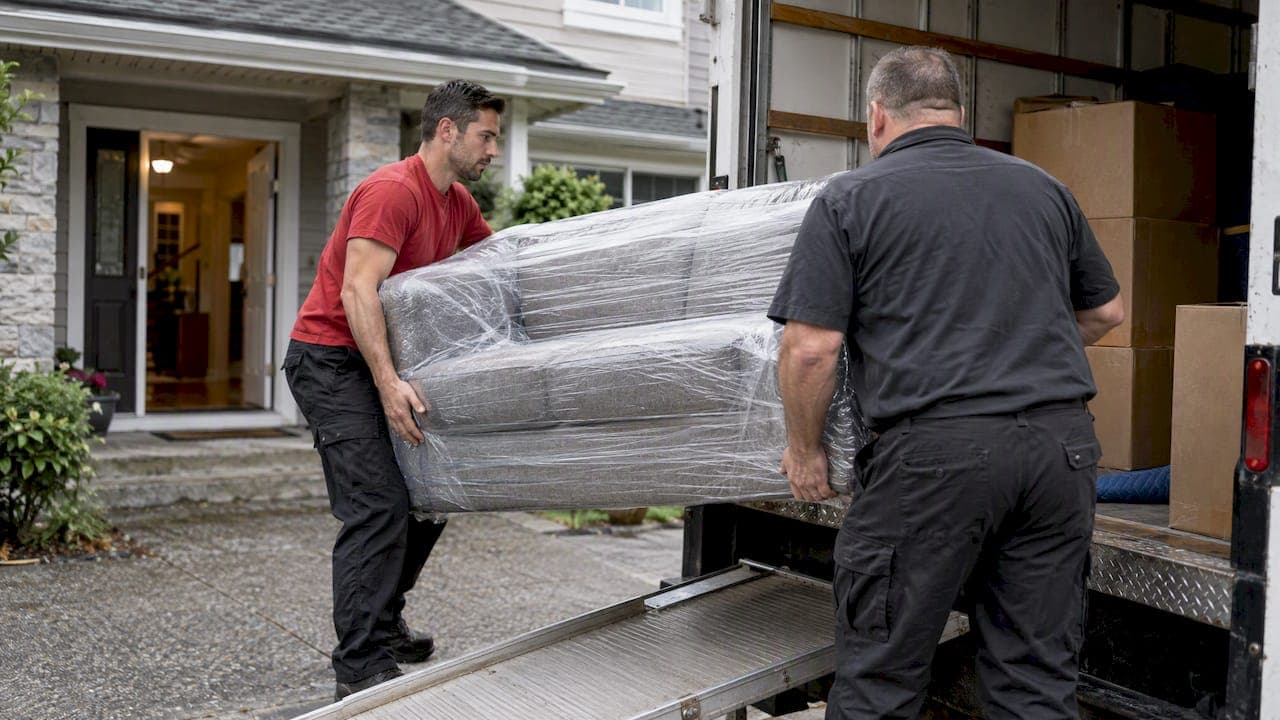
A studio or small one-bedroom move usually takes about 2 to 4 hours, a one or two-bedroom home runs 3 to 6 hours, and a three-bedroom house typically needs 5 to 9 hours, while four-plus bedroom homes can stretch across two days. Where you land inside that range depends mostly on how much you own, how far the crew has to carry it, and whether your boxes are packed before they arrive. The estimator section below helps you narrow that range to your own home.
TL;DR:
Use 1 to 1.5 hours per bedroom, add 30 minutes per stair flight or long carry, and budget 15 to 30 minutes per bulky item.
Three movers finish roughly a third faster than two, while four movers save the most time in homes with three or more bedrooms.
Pack, seal, and label boxes before arrival, stage them near the exit, clear walkways, and reserve elevator and parking access to prevent avoidable delays.
For long distance shipments, expect a delivery window rather than a fixed arrival time; confirm status 24 to 48 hours ahead and arrange appliance hookups later.
Table of Contents
-
What eats the hours: packing, loading, transit, and unpacking
-
Long-distance vs. local moves: delivery windows and transit time
-
Publisher perspective: planning habits that actually save hours
How long movers typically take by home size
A studio or small one-bedroom apartment with a short carry and no stairs is one of the fastest moves a crew handles, often wrapping up in under half a day when the building has elevator access and nearby parking. A two-person crew is standard for this size, and most of the time goes to loading and unloading rather than packing, assuming boxes are already filled.
One and two-bedroom homes bring more furniture and more decisions about what goes where, so the range widens. A two-person crew can still manage a one-bedroom in a reasonable window, but a two-bedroom with a full kitchen and a home office usually benefits from a three-person crew to keep loading and unloading moving at the same pace.
Two and three-bedroom houses are where crew size starts to matter more than almost anything else. A three or four-person team splits the work: some carry furniture while others wrap and stage boxes, which keeps the truck loading continuously instead of waiting on single movers to shuttle items one at a time.
Homes with four or more bedrooms often shift from a single, long day into a two-task or two-day operation, especially when they include a garage, a basement, or multiple storage areas. Packing day and moving day are frequently separated for homes this size, which keeps the actual loading and transport portion shorter and more predictable.
A few building-specific details change these ranges regardless of home size:
-
Elevator buildings often require a reserved service window, and missing that window adds waiting time to the whole crew’s schedule.
-
Street parking far from the entrance means every box and piece of furniture gets an extra carry, which adds up fast over a full move.
-
Walk-up apartments above the second floor typically add real time per trip since movers can carry less per climb and need more trips overall.
-
Strict building rules, like requiring floor protection or limiting move hours to a weekday window, can shrink the time available even when the crew is ready to work faster.
Matching your home size to the right range is a useful starting point, but the breakdown below shows where that time actually goes once the crew is on-site.
What eats the hours: packing, loading, transit, and unpacking
A move splits into five phases, and each one eats a different share of the clock. Professional packing, where a crew wraps and boxes everything on-site, typically adds the most time of any single phase because it includes decisions about materials and fragile-item handling that a homeowner has usually already made if boxes are packed in advance.
Loading moves at a predictable pace once boxes are staged near the door: a couch or dresser takes a few minutes to wrap, carry, and secure in the truck, and that pace holds steady as long as the path to the truck stays clear. Staging furniture and boxes by load order, heaviest and bulkiest items first, keeps the crew from backtracking through the home.

Driving and transit time depends on distance, but local moves rarely add meaningful time here since the truck usually travels a short distance between stops. Unloading tends to move a bit faster than loading because the crew already knows the layout of the truck, though appliance placement and furniture reassembly can slow this phase down if items were disassembled before the move.
Crew size changes the math at every phase:
-
A two-person crew handles loading and unloading sequentially, which works for smaller homes but stretches time on larger ones.
-
A three-person crew lets one mover stage items while two carry, keeping the truck loading continuously.
-
A four-person crew splits into two carrying pairs, which is where the biggest time savings show up on three-bedroom-plus homes.
Pro Tip: Pack a clearly labeled “first night” box with chargers, toiletries, and basic tools, so unpacking that one box takes priority over everything else once you arrive.
Factors that change how long your move takes
Several variables push a move toward the longer or shorter end of its expected range, and most of them are things you can plan around.
-
Access and parking: a long walk from the truck to your door, or a shuttle required for narrow streets, adds carry time on every single trip.
-
Stairs and elevators: each flight slows a crew down, and buildings without a reserved elevator window can add significant waiting time before loading even starts.
-
Inventory complexity: a home with several bulky or fragile pieces, like a piano or a large mirror, takes longer per item than standard furniture.
-
Packing readiness: boxes that are packed, sealed, and labeled before the crew arrives let movers go straight to loading instead of waiting on last-minute packing.
-
Disassembly and reassembly: beds, large shelving units, and some appliances need to come apart and go back together, which adds time on both ends of the move.
-
Season, weather, and traffic: severe weather conditions can slow both on-site handling and transit, so winter moves often need extra buffer time built into the schedule.
Most of these factors are at least partly in your control, which is exactly what makes a personal estimate worth calculating before moving day.
How to estimate your own move time
A simple formula gets you close enough to plan your day with confidence. Start with a baseline of 1 to 1.5 hours per bedroom for loading and unloading combined, then add time for the specific conditions of your home.
-
Set your baseline: multiply your bedroom count by 1 to 1.5 hours as a starting point.
-
Add access time: add 30 minutes for each flight of stairs without elevator access, or for a long carry from parking to your door.
-
Add item time: add 15 to 30 minutes for each oversized or fragile item beyond standard furniture, like a piano, large sectional, or china cabinet.
-
Adjust for crew size: a larger crew shortens the total hours but doesn’t change the total labor, so a three-person crew finishes roughly a third faster than a two-person crew on the same job.
For a one-bedroom apartment with no stairs, that works out to roughly 1.5 hours baseline plus loading and unloading, landing close to the 3-hour mark with a two-person crew. A two-bedroom home with one flight of stairs adds 30 minutes to a 2 to 3-hour baseline, pushing the total closer to 4 hours. A three-bedroom house with a couple of bulky items and no stairs might run a 4 to 4.5-hour baseline plus another half hour for those items, landing in the 5-hour range with a three-person crew.
Local moves commonly range from a few hours for a studio to several hours for a three-bedroom home, depending on crew size and access, which lines up closely with the formula above. If your calculation pushes past 8 to 9 hours, it’s worth budgeting a second day or scheduling a pre-pack session the day before, rather than compressing everything into one long shift.

How to speed up your move: checklist and day-of tips
A few habits before moving day consistently shave real time off the final hours, regardless of home size.
-
Pack priority boxes first and label every box with its destination room, not just its contents.
-
Stage boxes and furniture near the door in load order, with heavy and bulky items closest to the exit.
-
Clear walkways of rugs, cords, and clutter so movers can move quickly without stopping to navigate obstacles.
-
Pre-disassemble furniture that unbolts easily, like bed frames or simple shelving, before the crew arrives.
-
Reserve your building’s elevator window and confirm your exact parking spot the day before, especially in apartment buildings with strict scheduling.
Give the crew a short, clear walkthrough when they arrive instead of a room-by-room explanation. Point out anything fragile, anything that needs special handling, and where boxes should land in the new home, then let the team work.
Pro Tip: Take photos of how electronics and furniture are connected before disassembly, so reassembly at the new home takes minutes instead of guesswork.
Long-distance vs. local moves: delivery windows and transit time
Local moves finish in hours, but long-distance moves are quoted in delivery windows rather than a fixed arrival time, since shipments may be consolidated with other loads and drivers work under hour limits. A transit time guide typically gives a minimum and maximum delivery date rather than a single hour.
-
Mileage, driver-hour rules, and whether your shipment is combined with others all widen or narrow that delivery window.
-
Confirming your shipment’s status 24 to 48 hours before delivery is standard practice and helps you plan the exact day realistically.
-
The day before delivery is the right time to confirm final arrival details and make sure someone is available to receive the shipment.
-
Appliance reconnection and full unpacking are usually planned for the day after a long-distance delivery, not the delivery day itself.
Treating a long-distance timeline as a range rather than a fixed date avoids the frustration of expecting a truck that’s still a day out.
What to expect when you book movers
A written, itemized estimate after a proper inventory survey is standard practice and protects you from surprise charges or timing mismatches on moving day, according to Canadian consumer guidance on moving services. That same guidance notes that claim windows differ by move type, with shorter windows for local damage claims and longer windows for long-distance shipments, so it’s worth confirming those terms before move day.
-
Confirm your arrival window and ask what counts as an acceptable delay before booking.
-
Ask what happens if the crew runs more than an hour behind schedule, since pre-move scheduling guidance recommends notifying customers of delays beyond that mark.
-
Clarify valuation coverage and how claims timing works before, not after, loading starts.
Publisher perspective: planning habits that actually save hours
A thorough pre-move survey and a clear written quote cut out the guesswork that slows a crew down on-site. We’ve found that movers who arrive with a defined scope, rather than discovering the job room by room, consistently finish faster and with fewer surprises for the customer.
— Omar
How our moving service helps you finish faster
We focus on dependable service and clear communication, which means fewer surprises and less wasted time on moving day. When you request a guaranteed quote, share your home size, access details like stairs or parking, and any bulky items so we can give you an accurate time estimate upfront.

-
Tell us your bedroom count and whether you need packing services or just loading and unloading.
-
Mention any stairs, elevators, or long carries so your quote reflects real conditions.
-
Reach out through our contact page to get a time estimate built around your actual move.
FAQ
What to expect from a moving company?
A moving company should provide a written estimate after reviewing your inventory, a clear arrival window, and a crew sized appropriately for your home. Canadian consumer guidance recommends confirming payment terms and claim windows in writing before move day.
How much to tip on a $500 move?
Moving tips aren’t fixed by regulation, so the amount is a personal choice based on crew size and service quality. Many customers tip per mover rather than as a percentage of the total bill, with the amount reflecting how smoothly the job went.
How long does it take to move into a house?
A typical house move for a three-bedroom home commonly takes several hours, depending on access, crew size, and how ready your boxes are before the crew arrives. Larger homes with four or more bedrooms sometimes split into a packing day and a separate loading day.
Is it possible to move in 3 days?
Yes, a three-day timeline works for many moves when day one covers packing, day two covers loading and transport, and day three covers unloading and unpacking. This schedule is common for larger homes or long-distance moves where a single-day move isn’t realistic.
Sources
The timing guidance and consumer protections referenced throughout this article come from established government resources rather than industry marketing claims.
-
Moving advice — Office of Consumer Affairs (Government of Canada)
-
PRE-MOVE INFORMATION BOOKLET (Canada) — Departmental relocation guidance