Most Canadian movers will carry your things up and down stairs, but many price the extra work in one of three ways: a charge per flight, a flat stairs fee, or simply more labour time on an hourly job. The way to avoid a surprise is to tell your mover about every staircase before booking and to see those stairs written into the estimate. That is how we handle it at 2 Friends Trucking & Moving in Abbotsford: stairs are part of the quote conversation, not an item that appears on the final invoice.
TL;DR
- Movers usually do carry items up and down stairs. The question is how the extra effort is priced: per flight, as a flat fee, or as extra hours.
- Stairs, long carries and elevator limits are among the common reasons a move costs more than estimated, according to the Canadian Association of Movers.
- Tell the mover about every flight, narrow landing and elevator booking rule before you accept a quote, and ask for them to be written on the estimate.
- In Ontario, a written estimate generally caps the final bill at 10% above the quote, but access problems you did not disclose can still be charged. Other provinces have their own rules.
- Describe your stairs when you request a quote and the price you get will match the move you actually have.
Table of Contents
- Will movers go up and down stairs?
- How stair fees are charged in Canada
- What raises a stair charge
- The estimate is your protection
- What to tell your mover about stairs
- What to check on the written estimate
- A worked example
- Ways to keep stair work down
- How we price stairs
- Our perspective
- FAQ
- Sources
Will movers go up and down stairs?
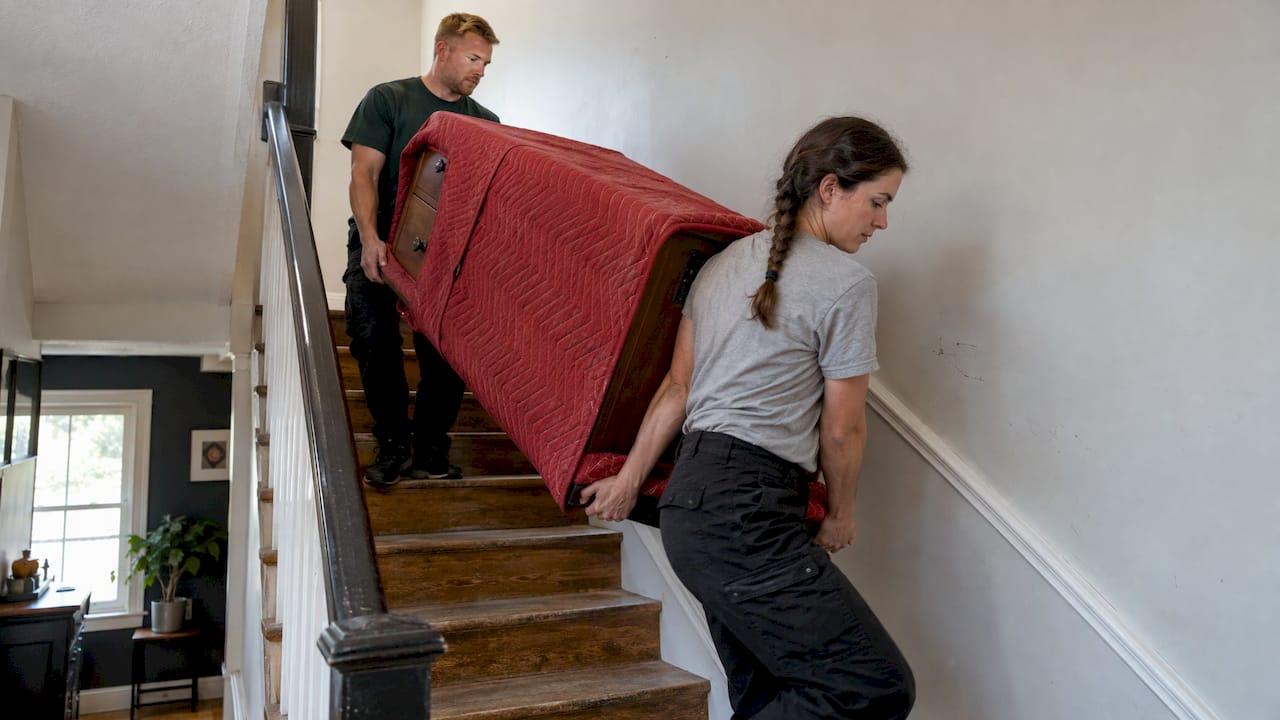
Yes. Walk-up apartments, split-level houses, basements and second storeys are everyday work for a professional crew, and nobody expects you to carry the sofa down to the street yourself. The real issue is cost and planning. Stairs slow a crew down, raise the risk of scuffed walls and strained backs, and change how many people are needed for a heavy piece such as a dresser, a washer or a piano.
That is why stairs show up as a line on a quote. A good mover treats them as a routine variable, the same as distance or the number of bedrooms, and prices them honestly up front.
How stair fees are charged in Canada
There is no national price list for stairs. Each moving company sets its own method, and the three you will meet most often are these.
| Method | How it works | Where it shows up |
|---|---|---|
| Per flight | A set amount for each flight of stairs the crew carries items up or down | Often on smaller or flat-rate jobs |
| Flat stairs fee | One charge for the whole job when stairs are involved | Walk-ups and multi-level homes |
| Built into the hourly rate | No separate line, but the job takes longer and the hours go up | Hourly moves, where time is the main cost |
Published figures vary widely between companies and cities, and prices change from year to year, so a number quoted in a blog post tells you little about your own move. Montreal, Toronto and the Fraser Valley all price differently. The reliable figure is the one on your own written quote.
One point trips people up: a company that advertises "no stairs fee" may still be charging for the time stairs take. Compare total quotes for the same move, described the same way, not individual fee lines. Our guide to how moving companies charge: hourly, flat rate and extras shows how those pieces add up.
What raises a stair charge
The Canadian Association of Movers lists flights of stairs, elevators and long carries among the common reasons a move ends up costing more than the estimate. In practice, these are the details that move the price:
- Number of flights. Three storeys of walk-up costs more effort than one short flight. Count every set of steps, including the basement and the front porch.
- Staircase shape. Narrow, steep, spiral or turning stairs slow the carry and make large furniture harder to manoeuvre.
- Heavy or bulky items. A fridge, a solid-wood bed frame, a safe or a piano on stairs may need extra hands.
- Distance from the truck. The walk from the door to the truck is a long carry. A long driveway or a far parking spot adds to the stair work.
- Elevators. A condo elevator that must be booked, padded and used only in a set window can save stair work, or add delay if it is not ready when the crew arrives.
- Volume. Fifty boxes up two flights is a very different job from ten.
Building rules matter as well. Many condos and apartment buildings restrict move times, require elevator reservations or ask for a deposit. Our guide on when to book movers and what building rules to expect covers the timing side.
The estimate is your protection
The Canadian Association of Movers treats the written estimate as the central consumer protection. It names flights of stairs and hoisting as typical unforeseen problems that raise the cost when they were not written on the estimate. Put simply, a stair you mention before booking is a stair priced into the quote. A stair you leave out is a stair the crew may charge for on the day.
What the rules say in Ontario
Consumer rules are set by each province, so this is one example, not a national rule. In Ontario, the Ministry of Consumer Services' estimates guide says that once you have a written estimate, the supplier cannot charge more than 10% above it unless you ask for additional work. The guide also recommends getting detailed written estimates from at least three suppliers, showing the date, the contact's name and signature, the hourly rate or hours, itemized services, the total, and the start and finish dates.

The 10% cap does not cover everything. Notes from a meeting between the Canadian Association of Movers and the Ontario ministry explain that the cap applies only to services described in the original estimate. Conditions at the origin or destination that the customer did not describe, such as a long carry or an elevator that is not available, can be charged. The same notes say the contract should state that extras cost extra. The logic is fair to both sides: what you control and failed to mention can be billed, and what was out of your hands cannot.
A summary of Ontario's Consumer Protection Act, 2002 adds that services over $50 need a written contract and that the price can exceed the estimate by no more than 10% without the consumer's written agreement.
If you are moving within British Columbia, ask the mover to explain in writing how the quote changes if conditions on the day differ from what you described. Whatever the province, the principle is the same: disclosure in writing protects you.
What to tell your mover about stairs
A short, accurate description gets you a quote that holds. Have these details ready for both addresses:
- Flights of stairs inside the home. Count each level the crew must climb, including basements and attics.
- Outside steps. Porch steps, garden stairs and any slope between the door and the truck.
- Staircase type. Straight, narrow, spiral, with a tight turn or low ceiling.
- Elevator details. Whether there is one, whether it needs booking, its size, and any move-in hours the building sets.
- Parking and carry distance. Where the truck can stop, and how far that is from the door.
- Large or awkward items. Pianos, safes, sectionals, appliances, king beds.
- Anything that will not fit. If a sofa cannot turn the corner, it is far better to know before moving day. If you are unsure which items movers will refuse altogether, see what movers won't move.
Photos help. A quick phone video of each staircase and the path to the street takes two minutes and removes most of the guesswork.
What to check on the written estimate
Before you sign or accept a quote, read it for these points:
- Are stairs listed at both the pickup and the drop-off, and how are they charged: per flight, flat or in the hourly time?
- Does the quote state a total, an hourly rate with an estimated number of hours, or a flat price?
- Are long carries, elevator waits and parking issues mentioned, and how would they be billed?
- Are heavy or specialty items named?
- Is it clear what happens if conditions differ from what you described?
- Are the date, the company's name and the contact details on the document?
Our list of questions to ask movers in Canada goes into more depth, and comparing three quotes for coverage, not just price shows why the lowest number is not always the lowest bill. Coverage for your belongings is a separate question again, covered in moving insurance in Canada.
A worked example
Imagine a family in a three-storey townhouse in Langley, moving a three-bedroom home. The main floor sits two flights above the garage, bedrooms are on the top level, and the new place is a ground-floor rental.
If the family says only "three-bedroom townhouse", the quote assumes an ordinary house. On the day, the crew finds three levels of narrow stairs, a king bed upstairs and a washer in the basement. The job runs longer, and the final bill differs from the quote.
If the family describes each level, mentions the bed and the washer, and sends a short video, the quote reflects the real work. The number may be higher at the start, but it is the number they pay. No figures here are published prices; they are only meant to show the principle: a fuller description beats a lower quote built on missing details.

Ways to keep stair work down
You cannot move a staircase, but you can make the crew's time on it count.
- Pack in boxes that are easy to carry. Overloaded boxes slow every trip. Our moving box guide by room helps you size the order.
- Clear the route. Move rugs, shoes and loose items away from stairs and landings, and keep access open at both ends. Our guide on preparing for movers explains how unreserved access can delay a move.
- Disassemble what you can in advance. Bed frames and tall shelving units travel better in parts.
- Protect floors and walls. Stairs are where scuffs happen. See our guide on protecting floors when moving.
- Sort before you move. Fewer items means fewer trips. A pre-move purge can cut hours from stair-heavy days.
- Reserve the elevator early. If your building has one, book it in writing and confirm the time.
How we price stairs
Our work is priced per move, based on distance, size and the services needed, such as packing or specialty items. Stairs are one of those details. We do not publish a fixed stairs fee, because a single flight and a four-level walk-up with a piano are not the same job. We want that conversation to happen before moving day, when you can still plan around it.
We move apartments, condos, houses and offices in Abbotsford, Mission, Maple Ridge, Langley and the wider Fraser Valley, and we handle furniture moving, packing, loading and unloading, and storage moves. If you are in a walk-up or a multi-level home, request a quote and tell us about your stairs. For a local move, our local moving page is the place to start.

If the heavy part of your move is a sofa, a dresser or a bed on stairs, our furniture moving service is built for exactly that kind of carry.
Our perspective
Stairs are the most common detail people forget to mention, and the easiest one to fix. A customer who tells us about every flight, the elevator rules and the parking situation gets a plan that fits the real move.
Our approach is clear communication, careful planning and careful handling of your items. We would rather hear about the narrow staircase and the piano in the basement now than meet them for the first time on moving day.
When you compare movers, compare how each one talks about stairs. A company that asks about your access, your building and your biggest items is a company planning your move properly.
Jack W.
FAQ
Do all Canadian movers charge extra for stairs?
Not all of them, and not in the same way. Some add a per-flight or flat fee, others build the extra time into an hourly rate. Ask how stairs are treated and compare the total quotes, not just the fee lines.
Is a stairs fee charged per flight or by time?
Both methods exist. Per-flight and flat fees are common on flat-rate jobs, while hourly jobs simply take longer when stairs are involved. Your written estimate should say which method applies to your move.
Can a mover raise the price on moving day because of stairs?
It depends on what was disclosed and on your province's rules. In Ontario, the Ministry of Consumer Services guide says a written estimate cannot be exceeded by more than 10% unless you ask for more work, and undisclosed access problems can still be charged. Describing your stairs up front and getting them on the estimate is the safest route.
What should I do if my building has an elevator?
Tell your mover, and book the elevator with building management for your move time. Confirm its size and any padding requirements. Elevator limits and waits are among the details the Canadian Association of Movers names as common causes of higher costs.
Will movers carry a piano or a safe up stairs?
Often yes, but these items need a dedicated plan and usually extra crew. Mention them when you request a quote so the right people and equipment are booked. We offer piano moving as one of our services.
Sources
- Frequently Asked Questions, Canadian Association of Movers
- Estimates, Ontario Ministry of Consumer Services
- Understanding Ontario's Consumer Protection Act, 2002
- Ministry meeting notes, August 11, 2005