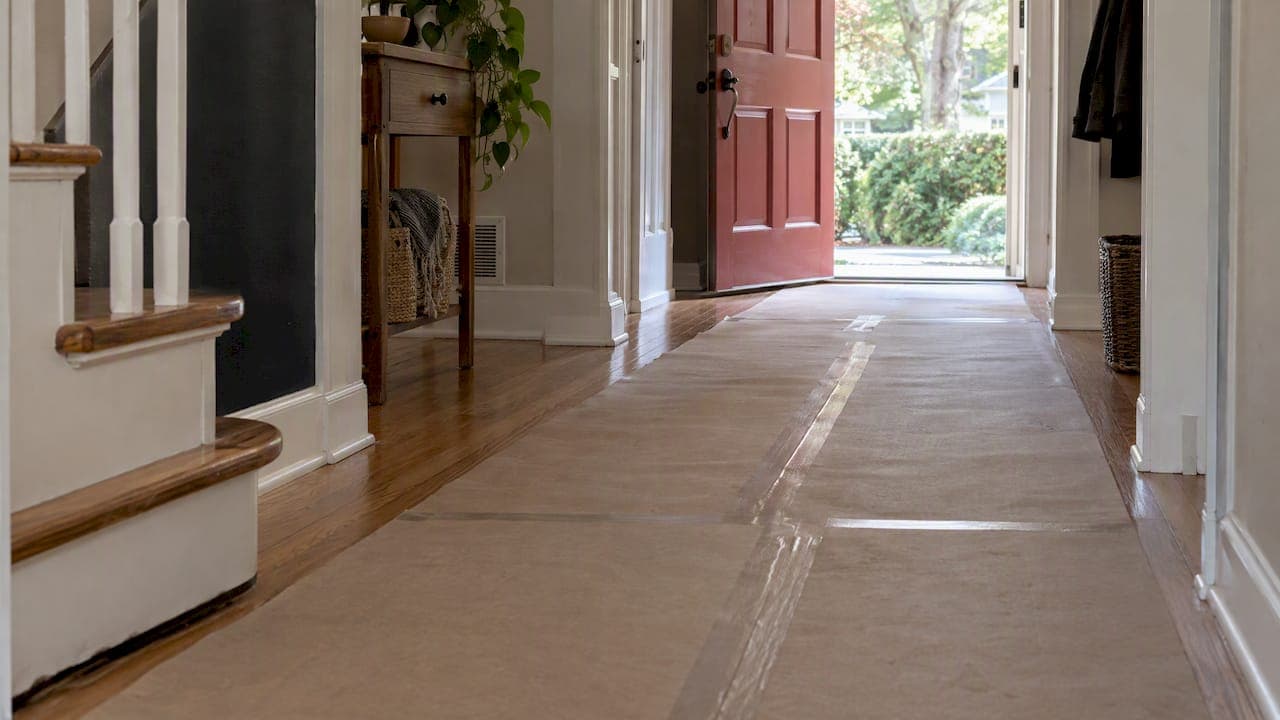
The best way to protect floors when moving is to cover every path the crew will walk, match the covering to the floor type, and keep heavy items off the floor surface altogether by lifting or carrying them. Dirt and grit scratch floors more often than furniture does, so the plan starts at the front door. Below, we cover what works on hardwood, vinyl and carpet, what to avoid, and what to ask your movers to bring.
TL;DR
- Cover the whole route, from the door to each room, at both the old and the new home. Don't cover only the room where the furniture sits.
- Use rigid board such as quarter-inch plywood or Masonite under heavy loads. Cardboard alone is not enough.
- Put mats at the door to catch grit, and skip rubber- or foam-backed mats on hardwood.
- Never slide or roll heavy furniture or appliances across a bare floor, even on a dolly.
- Ask your mover how they protect floors before you book, and have it confirmed in writing.
Table of Contents
- Why floors get damaged on moving day
- What to ask your movers to do
- Materials that work, and where to use them
- Protecting hardwood floors
- Protecting vinyl and laminate
- Protecting carpet and tile
- Moving furniture and appliances without damage
- A walk-through checklist for the day before
- Our perspective: floor protection is part of the job
- Moving help in Abbotsford and the Fraser Valley
- FAQ
- Sources
Why floors get damaged on moving day
A move puts more traffic through your home in a few hours than it sees in months. Crews make dozens of trips carrying boxes, mattresses, couches and appliances. The usual damage comes from four things:
- Grit under shoes. Sand and small stones act like sandpaper on a finished floor. In the Fraser Valley, a wet October morning brings mud in on every trip.
- Point loads. A fridge leg, a dolly wheel or a heavy dresser corner concentrates weight on a tiny area and can dent or gouge.
- Dragging. Sliding a piece even a short distance can scratch a finish or tear vinyl.
- Coverings that shift. A loose sheet can slip underfoot and chafe the floor it was meant to protect.
Each fix below targets one of these four.
What to ask your movers to do
You shouldn't have to buy supplies for a job you're paying professionals to do. The Office of Consumer Affairs in Canada advises customers to ask movers to use drop cloths or runners at both the origin and the destination to protect floors and rugs. That last part matters: many people only think about the home they are leaving, then find the new place scuffed within the first hour of unloading.
Before you book, ask these questions:
- What do you lay down on hardwood, tile and carpet, and is it included in the quote?
- Do you protect both homes, including stairs and hallways?
- How do you move appliances and very heavy items across finished floors?
- Do your crews wear clean shoes or shoe covers indoors?
- What happens if something gets damaged? Is it covered?
A crew that answers these without hesitating has done it before. Our guide on how to prepare for movers in Canada also covers clearing access so the crew isn't forced to improvise on bare floors.
Materials that work, and where to use them
Professional crews typically carry a mix of products rather than one cure-all: fabric or adhesive runners for hallways and stairs, heavy paperboard for large open areas, rigid hardboard or plywood for heavy loads, moving blankets for the furniture itself, and rubber-wheeled dollies. Here is how each one fits.
| Material | Best for | Watch out for |
|---|---|---|
| Fabric or plastic runners | Hallways, entries, stairs | Must be taped or held so they don't slide |
| Heavy paperboard (Ram Board type) | Large hardwood or tile areas, foot traffic | Less suited to stairs and uneven surfaces |
| Quarter-inch plywood or Masonite | Paths for fridges, safes, pianos, dressers | Needs to be secured so it can't move |
| Moving blankets | Wrapping furniture, padding corners | Not a floor covering on their own for heavy loads |
| Entry mats | Catching grit at doors | No rubber or foam backing on hardwood |
| Low-tack painter's tape | Holding coverings down | Test on finished floors first |
| Furniture sliders | Short repositioning on hard floors | Only for lighter pieces, and never a substitute for lifting |
Cardboard from old boxes is the most common DIY choice and the weakest. Lowe's flooring care guide says to use quarter-inch plywood or Masonite for heavy furniture or appliances, never cardboard, to make sure the covering cannot move or chafe the floor, and never to slide or roll heavy objects across it.
Protecting hardwood floors
Hardwood scratches and dents more easily than most people expect, and a new refinish is the most vulnerable of all.
Cover the route, not just the rooms. Run protection from the door down every hallway the crew will use. Tape seams so the sheets act as one surface.
Stop grit at the door. Shaw Floors recommends entry mats to collect dirt, sand and grit, and warns that rubber- or foam-backed plastic mats may discolor hardwood. Pick woven or fabric-backed mats, and swap them out if they get soaked.
Spread heavy loads. The same Shaw guide explains that the heavier the object, the wider the base needs to be to distribute pressure and prevent indentation. A thin felt dot under a loaded bookcase won't do it. A board under the load will.
Mind the humidity. Wood expands and contracts with moisture. Lowe's guidance suggests keeping indoor relative humidity between 35% and 55% through the year. During a move, doors stay open for hours, so a sudden change is possible in cold or damp weather. It's another reason to avoid soaking coverings left sitting on the boards for days.
Use paper, not plastic, over fresh finishes. If your floors were refinished recently, check with whoever finished them on how long it should cure before heavy traffic and what to lay on top. Breathable paperboard is the usual choice, and sealed plastic sheeting can trap moisture. If you can postpone the move a few days, do it.
Skip chemical cleaners. If tape leaves residue, don't reach for solvents. Mohawk's installation guidance says never to use chemical solvents to clean floors or remove adhesives because they can damage floor finishes. Use the manufacturer's recommended cleaner instead.

Protecting vinyl and laminate
Vinyl looks tough but tears and dents under point loads, and a dolly wheel can leave a permanent mark. For luxury vinyl sheet, Mannington says to use wood or hardboard runways for heavy furniture or appliances, even with a dolly or wheels, and to put wide-bearing, non-staining protectors under furniture.
Three practical points follow from that:
- Lay hardboard along the full path from the kitchen to the door when the fridge or stove goes out. Appliances are the most common cause of vinyl damage.
- Choose non-staining felt or wide plastic glides for the furniture's new home. Some rubber feet stain vinyl over time.
- Check the manufacturer's care page for your product. Laminate and vinyl vary by brand.
For the heavy items that need extra thought, see how we handle moving a home gym, where weight racks and machines are the main risk to flooring.
Protecting carpet and tile
Carpet. Adhesive plastic film made for carpet keeps mud and rain off high-traffic runs. Use it on carpet only, because the adhesive is not meant for hardwood. If you've just had new carpet installed, give it time: Mohawk's guidance stresses that staging and avoiding heavy traffic for 24 hours after a direct glue-down installation is critical to prevent adhesive breakdown, buckling and wrinkling. Schedule moves around that window where you can.
Tile and stone. Tile resists scratches but can chip or crack under a dropped corner or a point load, especially over a weak spot in the subfloor. Rigid board on the heavy paths and a runner on the rest is enough. Wet tile is slippery, so keep it dry for the crew's safety as well.
Stairs. Stairs take the most wear and are the hardest to cover. Fitted runners or carpet film work best. Loose sheets are a trip hazard for people carrying heavy loads.

Moving furniture and appliances without damage
Covering the floor is half of it. The other half is how things travel across it.
- Lift, don't drag. Two-person lifts and lifting straps keep legs off the floor entirely.
- Wrap first. Moving blankets protect the furniture and the door frames. Our furniture movers wrap pieces before they leave the room.
- Use the right wheels. Soft, rubber-wheeled dollies are gentler than hard plastic ones. On hardwood and vinyl, put board underneath.
- Measure the route. Check doorways, turns and stairwells in advance. A piece that jams in a hallway ends up dragged or tilted onto a floor edge.
- Take legs off. Remove table legs and bed rails where you can, so you carry the pieces rather than shuffling them.
Specialty items need their own plan. A pool table's slate can run to hundreds of pounds, and our guide on moving a pool table explains the equipment involved. For heavy valuables, see how to move a safe, and for delicate older pieces, antique furniture moving.
A walk-through checklist for the day before
A short routine takes under an hour and catches most problems.
- Walk the route. Trace the path from every room to the truck. Note stairs, tight turns and threshold strips.
- Photograph your floors. Take dated photos of each room in good light, including any existing scratches. If a dispute comes up, you have a baseline. Our house moving checklist covers how to log items and condition before the move.
- Sweep and vacuum. Clean floors under coverings mean less grit trapped beneath.
- Clear the path. Move rugs, small furniture and fragile decor out of the traffic lanes.
- Agree the plan with the crew lead. Point out fragile floors and new finishes on arrival.
- Repeat at the new home. Do a walk-through before unloading and decide where the heaviest items go first.
- Final check. Look at each room together with the crew lead before they leave.
If the weather turns, tell your crew. Wet days call for extra mats, more frequent swaps and a towel at the door.
Our perspective: floor protection is part of the job
We treat floor protection as part of doing a move properly, not an add-on. In our experience around Abbotsford, Mission, Langley and Maple Ridge, most floor damage is avoidable, and it nearly always comes from skipping the unglamorous steps: no runner at the entry, board missing on the fridge path, or a loaded dolly rolled across bare vinyl.
We plan the route before the first box moves, and that planning is what we mean when we talk about careful handling and clear communication. Customers who tell us up front about a refinished floor, a new carpet or a fragile entry get a better move, because we can set up around it. If you see a crew carry heavy items across a bare floor without a word about protection, that is a reason to ask questions.
One more thing: a quote that doesn't mention floors isn't necessarily wrong, but ask. A good mover will tell you plainly what they bring.
— Jack W.
Moving help in Abbotsford and the Fraser Valley
If you'd rather hand this off, we handle residential and commercial moves, local and long-distance within BC, along with packing, loading and unloading, and storage moves. Tell us about your floors when you ask for a quote, and we'll plan the route and the protection around them.

You can see everything we do on our Abbotsford moving services page, or go straight to loading and unloading help if you only need the heavy lifting. Packing your fragile items beforehand also keeps the floors clear on the day, which is where our packing services come in.
FAQ
What is the cheapest way to protect floors when moving?
Heavy paperboard or rigid board for heavy loads, plus woven entry mats, gives the best protection for the money. Old cardboard is the cheapest option, but it's weak under heavy loads, and Lowe's guidance says never to use it under heavy furniture or appliances. Use it only as a light layer for foot traffic, and tape it down.
Do movers protect floors, or do I need to?
A professional crew should bring floor coverings, and the Office of Consumer Affairs advises asking for drop cloths or runners at both locations. Ask before you book so there are no surprises. If you have a new refinish or special flooring, say so ahead of time.
Can I use plastic sheeting on hardwood?
It's risky for long periods. Rubber- or foam-backed plastic mats can discolor hardwood, according to Shaw Floors, and sealed plastic can trap moisture. Breathable paperboard or fabric runners are the safer choice, and you should remove coverings once the move is done.
How do I move a refrigerator without damaging vinyl or hardwood?
Lay quarter-inch plywood or hardboard along the whole path and make sure it can't shift. Don't slide or roll the fridge directly over the floor, even on a dolly, as Mannington and Lowe's guidance both advise. Use a crew with the proper equipment for appliances.
How should I protect carpet during a move?
Use adhesive carpet film or fabric runners on the route, and change them if they get wet or muddy. For new carpet, avoid heavy traffic for the first 24 hours after glue-down installation where possible.
Sources
- Moving advice, Office of Consumer Affairs (Canada)
- Cleaning Your Floors, Lowe's product document
- Hardwood Flooring Care and Maintenance, Shaw Floors
- Luxury Vinyl Sheet Care and Maintenance, Mannington
- Mohawk Group installation guidance (2020)