
In British Columbia there is no single provincial moving rulebook for strata buildings. Each strata corporation sets its own move-in and move-out rules through its bylaws or rules, within limits set by the Strata Property Act and its Regulation. That means the booking window, the elevator hours, the fee and the deposit all depend on your building, and a missed step can cost you a fine. We move apartment and condo residents around Abbotsford, Mission, Langley and Maple Ridge, so this guide covers what you need to settle with your strata before the truck arrives, and how a moving crew that plans around those rules saves you the stress.
TL;DR
- Your building's bylaws and rules decide the booking notice, moving hours, elevator padding, fees and deposit. Ask for them in writing before you book anything.
- A strata can charge a move fee only if it is reasonable and set out in a bylaw or a ratified rule. There is no fixed provincial dollar cap.
- Fines are capped at $200 per bylaw contravention and $50 per rule contravention, and you are responsible for your movers and helpers.
- Renters can be passed the strata's actual move fee, but not a refundable move deposit.
- Give your moving company the strata's rules early so the crew, the elevator booking and the protection of common property are planned together.
Table of Contents
- Which documents set the rules in a BC strata
- What strata move rules usually cover
- Can a strata charge a move-in fee or deposit?
- Who is responsible for damage, and what fines apply
- A step-by-step plan for a strata move
- Special cases
- Our view on strata moves
- Plan your strata move with us
- FAQ
- Sources
Which documents set the rules in a BC strata
A strata corporation is the legal body that owns and runs the shared parts of a condo or townhouse complex, called common property: lobbies, hallways, stairwells, elevators and loading bays. Moving through those spaces is regulated in three layers.
- The Strata Property Act and Regulation. These set the outer limits: what fees can be charged, how big fines can be and what process a strata must follow.
- Bylaws. Standard Bylaws apply by default unless the strata has filed its own. Bylaws can be changed only by a three-quarters vote of owners and must be filed at the Land Title Office to take effect, according to the Province's bylaws and rules guide.
- Rules. Council can make rules about the use of common property, but a rule lapses at the next annual general meeting unless owners ratify it by majority vote. The same page says a rule cannot impose a user fee until it has been ratified that way.
Most move-in procedures live in a bylaw or a rule titled something like "Move-In/Move-Out Procedures". Ask the strata manager or council for the current version. The Province says stratas must give owners and tenants access to bylaws and rules within one week, and may charge no more than 25 cents per page for copies.
If you rent, the bylaws apply to you whether or not your landlord handed them over. The Province's tenants in stratas page says a landlord must give tenants the bylaws, the rules and a Form K (Notice of Tenant's Responsibilities). A tenant who was never given them can end the tenancy without penalty within 90 days of learning of the failure and recover reasonable moving expenses up to one month's rent.
What strata move rules usually cover
Buildings differ a lot, which is why you cannot rely on a friend's experience in another tower. Three published examples from BC strata documents show the range.
| Building | Notice | Hours | Fee | Deposit |
|---|---|---|---|---|
| Yaletown Park 1 & 2 (2015 rules) | 48 hours | 9 a.m. to 5 p.m., no start after 1 p.m. | $150, waived if no elevator, hallway or stairwell is used | $200 refundable |
| Tsawwassen Springs (2019 bylaws) | 7 days | Caretaker monitoring at $25/hour, $50/hour outside 8 a.m. to 6 p.m. weekdays | $250 non-refundable | $500 refundable |
| The Crescendo (2024 bylaws) | 7 days | 8 a.m. to noon Monday, 8 a.m. to 4 p.m. Tuesday to Saturday, no statutory holidays | $300 | $400 refundable |
These are older or building-specific figures, so treat them as illustrations of what to look for, not as what your building charges. The pattern is consistent, though. Expect most of the following:
- Advance notice. Anywhere from 48 hours to a week or more, often on a booking form. Large-item deliveries, such as a sofa or a bed, can have their own booking.
- Restricted hours. Weekday daytime slots, a latest start time, and sometimes no Sundays or statutory holidays.
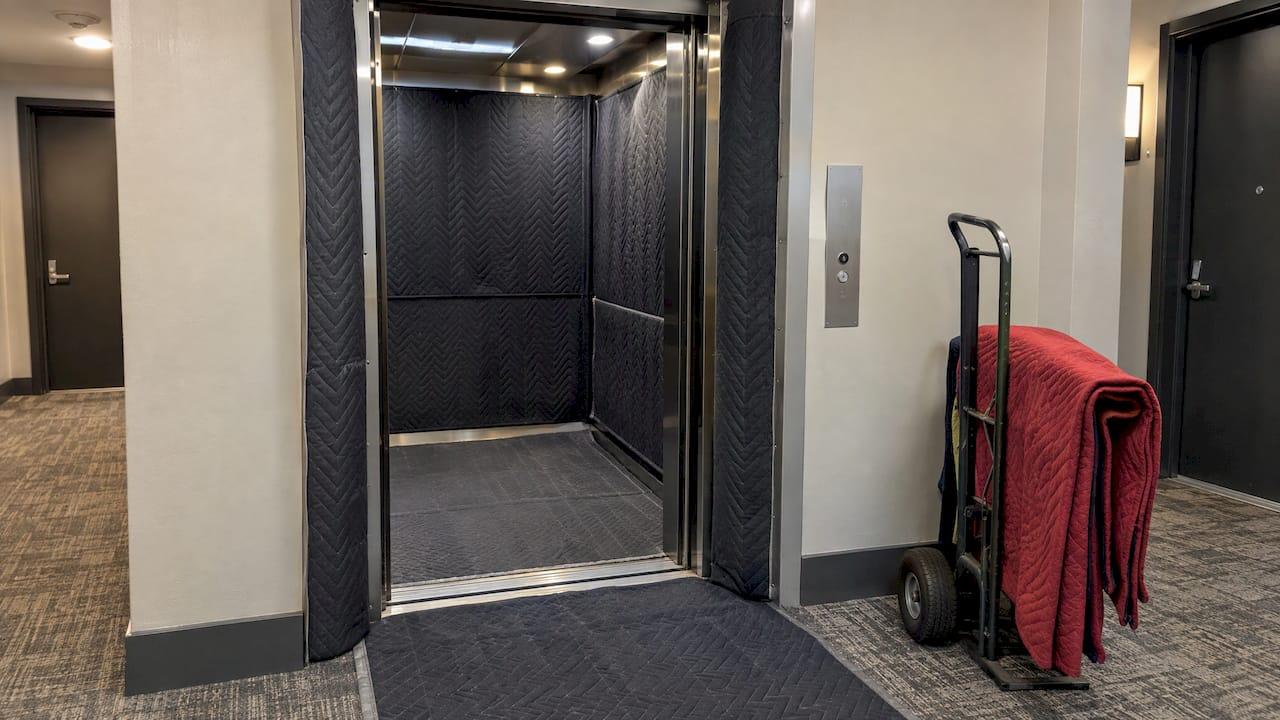
- Elevator booking and padding. Many buildings reserve the elevator for a set block and require wall pads and floor coverings.
- A move fee and a deposit. The fee is a charge for use of common property. The deposit is security against damage and is returned if the inspection after the move is clean.
- Overrun charges. The Crescendo, for example, charges $50 an hour when a move exceeds its four-hour booking, and Yaletown Park 1 & 2 charges $30 an hour plus tax with a four-hour minimum.
- Before-and-after inspections of the elevator, hallways and loading area.
Can a strata charge a move-in fee or deposit?
Yes, with limits. Under section 110 of the Strata Property Act and section 6.9 of the Regulation, a strata can charge user fees for common property only when the amount is reasonable and the fee is set out in a bylaw or in a rule ratified at a general meeting. The Strata Property Regulation allows the fee to be a fixed amount or based on a reasonable measure such as recovery of operating or maintenance costs, number of users or duration of use. It sets no provincial dollar ceiling.
What "reasonable" has meant in practice
Because there is no cap, disputes go to the Civil Resolution Tribunal (CRT), BC's online tribunal for strata disputes. A Legal 500 review of move-fee cases says reasonableness is judged objectively and may take into account market conditions and the strata's actual costs. It lists decisions where fees were cut or cancelled, including a $300 fee cancelled for a 30-minute move of a few small items and a $200 fee reduced to $25 where there were few belongings and no elevator lock-out.
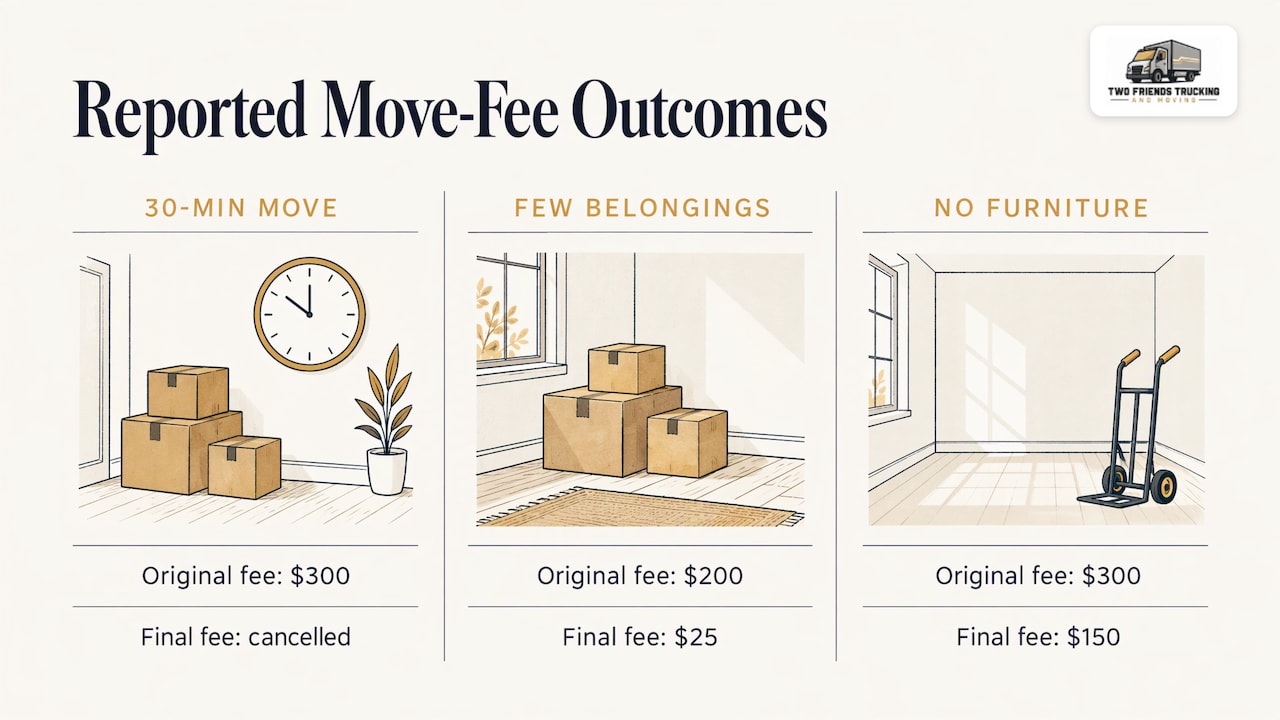
A 2024 case followed the same logic. As reported by Vancouver Is Awesome, a CRT member found a $300 move-in fee unreasonable for moves that involved no furniture and ordered the strata to charge $150. The takeaway for a resident: if your move is small and needs no elevator or padding, ask whether the fee is waived or reduced, and ask which bylaw or ratified rule authorises it.
Deposits and tenants
A damage deposit is separate from the move fee. It is security the building holds, and repair costs are deducted from it, with any excess charged to the strata lot. If you rent, the rules differ. Under the Residential Tenancy Regulation, a landlord may pass on the strata's actual move fee, but a refundable strata move deposit is not a permitted tenant charge, as the research summary of the Regulation and the LSLAP landlord and tenant chapter explain. Security and pet deposits under the Residential Tenancy Act are each capped at half of one month's rent. If you are a tenant and your landlord asks you to cover a strata deposit, raise it with the Residential Tenancy Branch.
Who is responsible for damage, and what fines apply
The bylaws generally hold owners, tenants, occupants and visitors responsible for damage to common property beyond reasonable wear and tear. In a move, that includes your movers and any friends carrying boxes. You answer to the strata for what they do.
Fines are limited by section 7.1 of the Regulation: up to $200 for each contravention of a bylaw and up to $50 for each contravention of a rule. A continuing contravention can be fined again every seven days. Before fining anyone, the strata must follow section 135 of the Act: receive a complaint, give you the particulars in writing and give you a reasonable chance to respond, including a hearing at a council meeting if you ask for one.
Two recent decisions show how this plays out:
- A May 2026 Residential Tenancy Branch decision upheld $200 fines against tenants for an unbooked Sunday move and for improper garbage disposal. The tenants' signed Form K confirmed they had to follow the bylaws, and going ahead with a prohibited move without seeking an exemption did not excuse them. The landlord recovered the $400.
- A CRT decision reported by the Delta Optimist in September 2026 upheld two $200 fines: one for delivering large furniture without the booking the move bylaw required, and one for lobby drywall damage. The tribunal also let the strata use surveillance footage to enforce its bylaws.
If a rule genuinely does not work for your move, for instance a safety concern with the permitted time, ask the strata for an exemption or alternative arrangement before moving day. Do not simply proceed.
A step-by-step plan for a strata move
Here is the routine, with where each step goes wrong and what we do on our side.
1. Get the current bylaws, rules and move form
Ask the strata manager or council for the full bylaws, rules and the move-in/move-out booking form. Make sure you have the current versions: bylaws only take effect once filed, and rules lapse if not ratified. The common mistake is working from an old PDF posted on a building portal. When you book with us, send us the rules and we plan the crew size, arrival time and protection of the building around them.
2. Ask what the fee covers
Request the bylaw or rule number that authorises the fee, plus a note of what it covers and whether it is waived for small moves. If nothing supports it, pay it if you must to keep your move date, then dispute it through the CRT rather than passing an unsupported charge to a tenant.
3. Book the elevator and loading area early
Submit the form with the full notice period, not the minimum. Slots in popular buildings fill at month ends and on weekends. State how many large items are coming, since some stratas require a separate booking for them. The mistake that gets fined is the unbooked delivery, such as a new mattress or sofa arriving on a day nobody told the building about. Our apartment and condo moving service covers condo and apartment moves, so the elevator window is built into the schedule.
4. Prepare common property
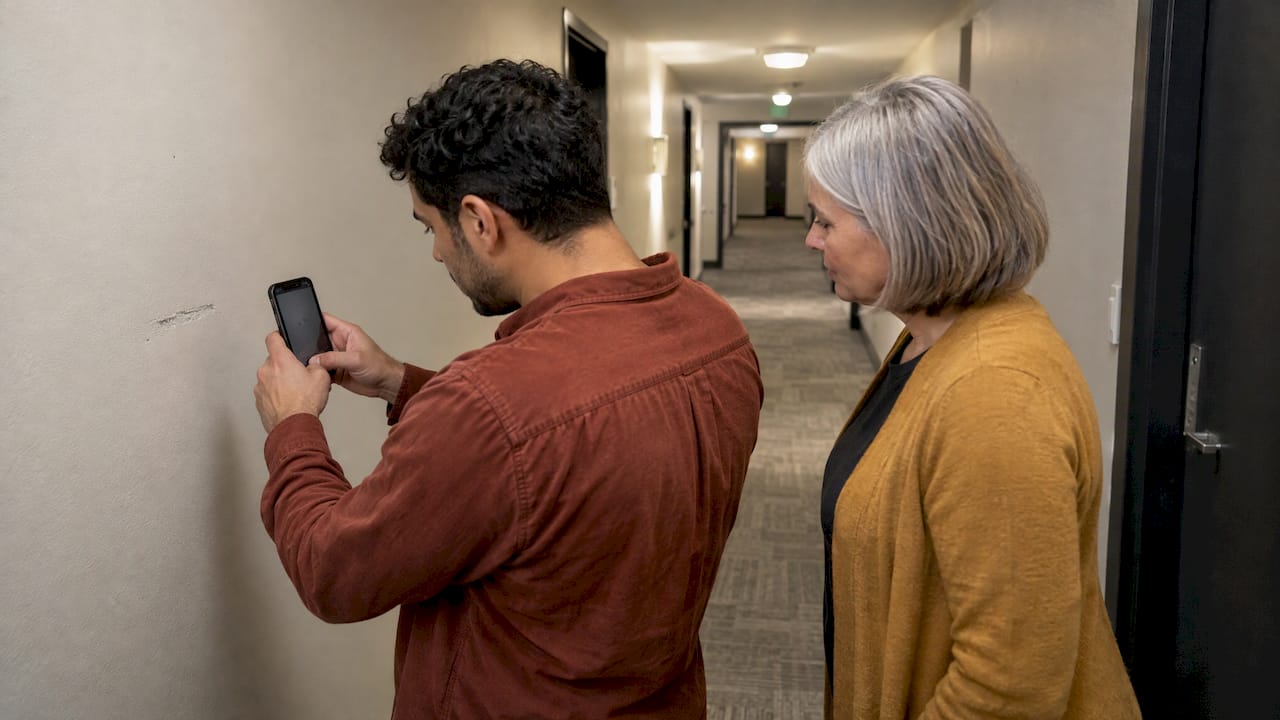
Buildings commonly require elevator pads, floor coverings and drop cloths along the route. Do a short walkthrough with the manager or caretaker before the move to record existing scuffs and defects, which protects your deposit. A site walkthrough for deficiencies follows the same idea: note what is already there before work begins, and photograph it.
5. Pack so the move fits the window
Overruns are charged by the hour in many buildings, so a move that is half-packed at the start time costs more. Our packing services take the boxing off your hands, which keeps the loading time inside the booked block.
6. Move inside the hours and keep the path clear
Start on time, keep doors from being propped open unattended, dispose of packing waste properly (garbage was one of the fines in the RTB case above) and keep your helpers aware of the rules. Our loading and unloading crews handle the carrying, so you are not coordinating friends through the lobby.
7. Do the final inspection
Walk the route with the caretaker or manager after the move and get the deposit return timeline in writing. Tsawwassen Springs, for example, returns its deposit within seven days if there is no major damage.
Special cases
Piano or bulky furniture. Heavy items are what stratas worry about most, and some require separate notice. See our piano movers and furniture movers pages.
Moving out of a strata. Move-out rules usually mirror move-in rules, with the same booking and deposit steps. Sellers should also check dates against the possession date, since a missed booking can delay the move.
Business moves. Commercial strata buildings can have their own rules and hours. Our office moving team plans around building access requirements.
Longer moves. If you are leaving a strata for another city, you still need the exit booking at the old building and, at the destination, the arrival booking. See long-distance moving within BC.
Our view on strata moves
Most strata problems we see on paper are not about large costs. They come from a booking that was late, an elevator that was not padded or a delivery nobody announced. Each of those is a planning problem, and planning is what a mover should take off your shoulders.
That is why we want the strata's rules before we quote the day. The hours, the notice period and the building's protection requirements shape how many people we send, when we arrive and how we sequence the load. We would rather build the move around the rulebook than rush a crew through a lobby at 4:55 p.m.
For residents in Abbotsford, Mission, Langley and Maple Ridge, we handle apartment and condo moves, packing, loading and unloading, and furniture, so the part of the move that touches common property is done carefully and on schedule.
Jack W.
Plan your strata move with us
If you are moving in or out of a condo, townhouse or apartment in Abbotsford or the Fraser Valley, we can plan the move around your building's booking window, elevator hours and protection rules. Send us the bylaws or move form and we build the schedule from there, whether it is a small apartment, a full condo, a piano or an office.

See our apartment and condo movers page or request a quote on our home page. We also serve Langley, Mission and Maple Ridge.
FAQ
How much notice does a BC strata need for a move?
There is no provincial minimum. Each strata sets it in its bylaws or rules, and published examples range from 48 hours to seven days or more. Check your building's current bylaws and book with the full notice, not the minimum.
Is there a maximum move-in fee in BC?
No fixed dollar cap exists. The fee must be reasonable and set out in a bylaw or a ratified rule, under section 6.9 of the Strata Property Regulation. Tribunal decisions have reduced fees where the move was small or used no elevator.
Can my landlord charge me the strata's move deposit?
A landlord may pass on the strata's actual move fee, but a refundable strata move deposit is not a permitted tenant charge under the Residential Tenancy Regulation. Security and pet deposits are each capped at half of one month's rent.
What is the most a strata can fine me for breaking a moving rule?
Up to $200 for each bylaw contravention and $50 for each rule contravention, and a continuing breach can be fined again every seven days. The strata must first give you written particulars and a chance to respond.
Sources
- Strata Property Regulation, BC Laws
- LSLAP landlord and tenant law chapter
- Yaletown Park 1 & 2 rules (BCS 2103)
- Tsawwassen Springs bylaws (BCS 4118)
- The Crescendo bylaws (BCS 2759)
- Legal 500: charging moving fees
- Vancouver Is Awesome: move-in fee tribunal ruling
- Residential Tenancy Branch decision, May 2026
- Delta Optimist: CRT ruling on strata fines
- Site walkthrough for deficiencies