Full packing means the movers pack every box in your home. Partial packing means they pack only the items you choose, usually the breakables and awkward pieces. Book full packing if time, health or a tight schedule is the problem. Book partial packing if you can handle the easy rooms and want professionals on the items that break. At 2 Friends Trucking & Moving, both are part of our packing services in Abbotsford, and the right mix depends on your home and your calendar.
TL;DR
- Full packing: the mover packs every box. The Canadian Association of Movers (CAM) lists it as an additional service on the estimate.
- Partial packing: the mover packs specific items, such as breakables. You pack the rest.
- Liability: if you pack a box and something inside is damaged, CAM states the claim is inadmissible. Items the crew packs are covered by the mover's terms, so give them what is fragile or valuable.
- Best fit: full packing for short timelines, large homes or limited mobility. Partial packing for most other moves.
- Get it in writing: the estimate should state exactly which rooms or items are packed and by whom.
Table of Contents
- What full packing and partial packing mean
- Full packing: what you get
- Partial packing: what you get
- Full vs partial packing side by side
- The liability point most people miss
- How to decide: five questions
- What to check on the estimate
- If you pack some of it yourself
- Our view on partial vs full packing
- Book packing with your move
- FAQ
- Sources
What full packing and partial packing mean
In Canadian moving, packing is not assumed. CAM's consumer guidance describes packing charges as an additional service listed on the estimate. There are two versions:
- Full packing: the mover packs every box.
- Partial packing: the mover packs specific items, such as breakables.
So when someone asks whether movers pack your things when you hire them, the answer is: only if packing is on your estimate. A standard move covers loading, transport and unloading. Packing is added on top, either for the whole home or for the parts you select.
That is why two quotes for the same three-bedroom house can look very different. One may include a full pack, another only a handful of wardrobe boxes and a kitchen. Compare what is in the quote before you compare the totals.
Full packing: what you get
With full packing, the crew arrives with materials, wraps and boxes your belongings room by room, and prepares everything for loading. You are not buying only labour. You are buying back your evenings and weekends in the weeks before the move.
Full packing makes the most sense when:
- Your timeline is short. A move booked with two weeks' notice leaves little time to pack a whole house. Our guide to when to book movers shows how lead times vary, and last-minute moves are where full packing earns its keep.
- The home is large. Basements, garages, storage rooms and long-held collections take far longer than most people estimate.
- Packing is physically hard for you. Lifting, bending and working through the night is not a good plan if you have an injury or a health condition.
- You are managing a family move. Children, work and school schedules rarely leave room for a week of packing.
- Liability matters to you. The crew packs every box, so the whole load sits under the mover's packing and handling process rather than a mix of owner-packed and mover-packed cartons.
What full packing does not include
Expect to keep a few things out of the boxes. CAM's guide advises you to take valuables such as money, important papers, photographs and jewellery with you. Keep medications, passports, laptops, chargers and a first-night bag with you as well.
Unpacking is a separate matter. CAM notes that the crew will reassemble anything that was taken apart and unpack boxes the moving company packed, but movers do not put things away. They unpack to tables, counters and other flat surfaces, and unpacking after a full pack is usually done the next day. Confirm that detail on your own estimate, because unpacking can be listed separately.
Partial packing: what you get
Partial packing puts the professionals where the risk is. The mover packs specific items, such as breakables, and you handle the remainder. It is the most flexible option, and it is what most households with a normal timeline choose.
Typical items to hand to the crew:
- Kitchen contents: dishes, stemware, small appliances, mixed cupboards. Our guide on how to pack glasses without breaking them shows how much technique goes into one cabinet.
- Mirrors, paintings and framed art: flat, awkward and easy to crack. See how to pack artwork.
- Electronics: televisions, monitors, audio equipment.
- China cabinets, lamps and decor with fragile parts.
- Anything of high value or sentimental weight.
Typical items you can pack yourself:
- Books, in small boxes so they stay liftable
- Clothing and linens
- Off-season items and garage goods
- Toys, games and décor that can't break
That split matches the common guidance that kitchens and large fragile items benefit most from a packing service, while clothes, books, decor and garage items can be packed by the household.
A practical way to choose what the movers pack
Walk through your home with three piles in mind:
- Hand to the crew: fragile, valuable, awkwardly shaped or time-consuming (kitchen, art, electronics).
- You pack, low risk: soft, sturdy, replaceable (clothes, books, linens).
- Travels with you: documents, jewellery, medication, daily essentials.
Then put the first pile in writing on the estimate, room by room. "Kitchen and dining room, all artwork and mirrors, TV and office electronics" is clear. "Some fragile things" is not.
Full vs partial packing side by side
| Factor | Full packing | Partial packing |
|---|---|---|
| Who packs | Movers pack every box | Movers pack selected items, you pack the rest |
| Your time before the move | Minimal | Moderate: easy rooms are yours |
| Best for | Short notice, large homes, limited mobility | Most standard moves with a few weeks of lead time |
| Fragile items | Handled by the crew | Handled by the crew |
| Liability on packed boxes | Movers packed them | Only for what the movers packed |
| Estimate detail needed | Rooms covered, materials, unpacking terms | Exact list of rooms or items the crew packs |
| Cost driver | Volume of the home and crew time | Number and type of items you hand over |
On cost, the logic is simple: the more the crew packs, the more time and materials the estimate includes. Published figures online are mostly American and vary widely, so they do not tell you much about a Fraser Valley move. The reliable number is the one on your own written estimate, based on your actual home.
The liability point most people miss
This is the part that should shape your decision more than any price difference.
CAM's guidance states that if you packed a box and there is damage inside, the claim is inadmissible. A customer-packed box carries no mover liability for its contents. The crew still carries the box, but they did not see what is in it or how it was cushioned.
That is why the usual advice is to give the crew your breakables. If you pack your own box of glassware and something cracks, there is no claim to make. If the crew packs it, the item sits within the mover's handling.

It also helps to know the baseline. CAM explains that released liability under provincial conditions of carriage is limited to $0.60 per pound ($1.32 per kg) per article for household goods. Increased carrier liability can be bought for an extra charge, and the agreed value often has a minimum such as $10 per pound multiplied by the weight of the goods. For a fuller picture, read our guide to moving insurance in Canada.
The practical conclusion: whichever option you choose, do not pack your most valuable or fragile things yourself.
How to decide: five questions
1. How many weeks do you have? If you are more than a month out and the home is average size, partial packing works well. Under two weeks, full packing removes the pressure. Our house moving checklist lays out an 8+ week plan if you want to see how the work spreads out.
2. How much of the home is fragile? A home full of glassware, art and electronics is a strong case for the crew packing most rooms. A home of mostly furniture, clothes and books is a partial-pack home.
3. Can you physically do it? Packing a house is days of lifting and repetitive motion. If that is a concern for you or a family member, full packing is the safer choice.
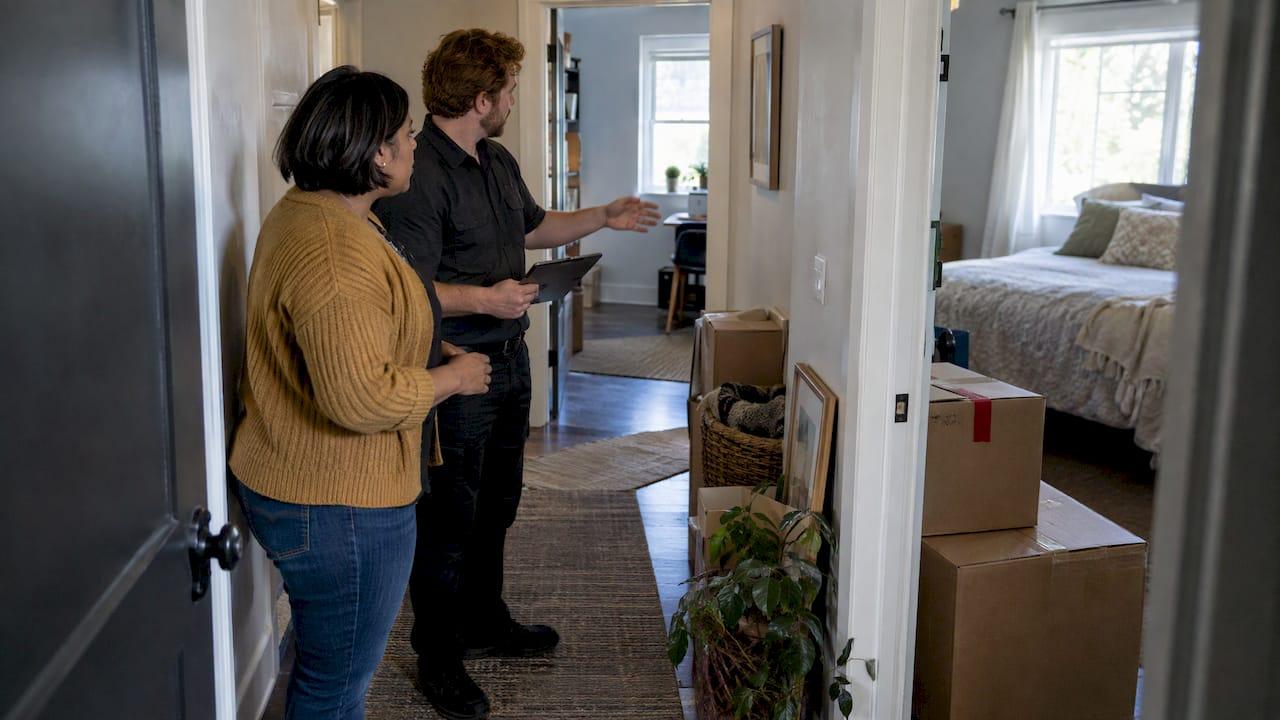
4. What is your building doing? Condos and apartments often have booking windows for elevators and loading areas, which tightens the schedule. A crew that packs fast can save you from running over. See our guidance on preparing for movers for access issues.

5. How much do you value your own time? If a weekend of packing costs you work, family time or sleep, the added line on the estimate may be well spent.
Examples
- A one-bedroom apartment, five weeks' notice. Partial packing. The crew handles the kitchen, TV and mirror. You pack clothes, books and bathroom items.
- A four-bedroom house in Langley, ten days' notice. Full packing. There is too much to do in the time left.
- A condo move for a downsizing couple, with a lot of art and glassware. Partial packing with a long fragile list, or full packing if one of them has mobility limits.
- An office relocation. Packing is usually split by department. Staff pack desks and personal items, while the crew handles IT equipment and shared spaces. See our commercial moving services.
What to check on the estimate
Whichever you choose, the estimate is where the packing arrangement becomes real. The Government of Canada's Office of Consumer Affairs recommends that a quote include the number of boxes, item sizes and values, cost, payment terms and service timing, on company letterhead and signed by a company representative. CAM's Good Practice Guidelines say the same thing: written estimates on letterhead stating the number of boxes, the size and value of items, the hourly or flat rate, payment terms and timing, signed by both the company and the customer.
For a packing service, add these specifics:
- Which rooms and items the crew packs. Written out, not implied.
- Whether materials are included or itemized.
- Whether unpacking is included, and what it covers (see the point above on flat surfaces and next-day timing).
- How the move is priced: hourly, flat rate, or by weight. If charges are based on weight, CAM's guidelines require a certified scale at origin, and a re-weigh on request if the actual weight exceeds the estimate by more than 10%.
- Payment terms. A mover can legally ask for payment in advance of delivery, but the Office of Consumer Affairs notes that in most situations it will not exceed the estimate by more than 10%.
- Liability. Ask how owner-packed boxes are treated, and whether you want increased coverage.
Ontario's guidance on hiring a mover makes one more point worth copying wherever you live: be clear about whether the company will provide packing as well as move your belongings, or move only the items you have packed yourself.
For more on this, see our list of questions to ask movers and how to read quotes for coverage, not just price.
Tell the estimator everything
CAM stresses that the surveyor must go room to room with you and look at everything moving, and that it is your responsibility to say everything you plan to take. The same guidance warns that adding undisclosed items later only penalizes you, since the contract price is usually void if additional items appear. For packing, that means showing the estimator the garage, the storage closet and the crawl space, so the packing scope and the price match the real home. If you are also preparing for a home sale or purchase, the closing costs guide for Canada helps you plan the budget around the move.
If you pack some of it yourself
Partial packing works best when your boxes are good. A few rules, based on CAM's advice to start early, pack by room, and keep a list:
- Start early with rooms you use least.
- Label each box with your last name, a general description and the destination room, and number the boxes while keeping a list.
- Use small boxes for books and heavy items. A box you can't lift safely is a box that gets dropped.
- Use sturdy containers. Reusable plastic moving boxes with secure lids are one way to avoid crushed cardboard, if they are available where you live.
- Do not seal the fragile stuff. Set it aside, clearly marked, for the crew.
- Keep valuables and documents with you.
Finish your boxes before the crew arrives. Packing on moving day while a crew waits is the most expensive way to do it.
Our view on partial vs full packing
At 2 Friends Trucking & Moving, we see packing as the part of a move where planning matters most. A move goes well when the packing scope is clear before the truck arrives.
Our advice is to decide by risk, not by habit. Hand us the kitchen, the art, the electronics and the pieces you would hate to replace. Pack the soft, sturdy things yourself if you have the time. If you do not have the time, or the home is large, have us pack everything and take that week back.
We would rather you tell us your timeline and what worries you, and build the packing plan around that. We handle residential and commercial moves across Abbotsford, Mission, Maple Ridge and Langley, and packing sits alongside loading, unloading and transport so there is one team and one plan.
Jack W.
Book packing with your move
If you want the crew to pack some or all of your home, tell us the size of the home, your moving date and which rooms are your priority. We offer packing services alongside local moves, long-distance moves within BC, apartment and condo moves, furniture moving, and loading and unloading. Start on our packing services page, or reach us through the Abbotsford movers homepage to ask for an estimate.

If your move is a long haul, our long-distance moving page explains what that involves. For local moves, see local movers in Abbotsford.
FAQ
Do movers pack everything when you hire them?
Not automatically. In Canada, packing is an additional service listed on the estimate. Full packing means the mover packs every box, and partial packing means the mover packs specific items such as breakables. If packing is not on your estimate, plan to have boxes ready before the crew arrives.
What is a full packing service?
It is a service where the movers pack every box in your home. You still keep valuables, documents and daily essentials with you. Unpacking is usually a separate item: crews unpack to flat surfaces rather than putting things away, and it is typically done the next day.
What should I have movers pack if I choose partial packing?
Start with fragile and awkward items: kitchen contents, glassware, mirrors, artwork and electronics. These are the things most likely to break and hardest to pack well. Clothes, books, linens and garage items are usually easy for you to pack.
What is the most efficient way to pack for a move?
Start early and pack room by room. Label each box with your last name, a general description and the destination room. Number the boxes and keep a list. Hand the crew whatever is fragile.
Sources
- The Moving Process: What to Expect, Canadian Association of Movers
- Canadian Association of Movers consumer guide
- Good Practice Guidelines for Canadian Movers
- Moving advice, Office of Consumer Affairs, Government of Canada
- Hiring a mover, Government of Ontario
- Ten ways to cut your moving cost, MovingCalculator.io
- Moving boxes, Moving Box Rental
- Typical closing costs in Canada, FindRE