
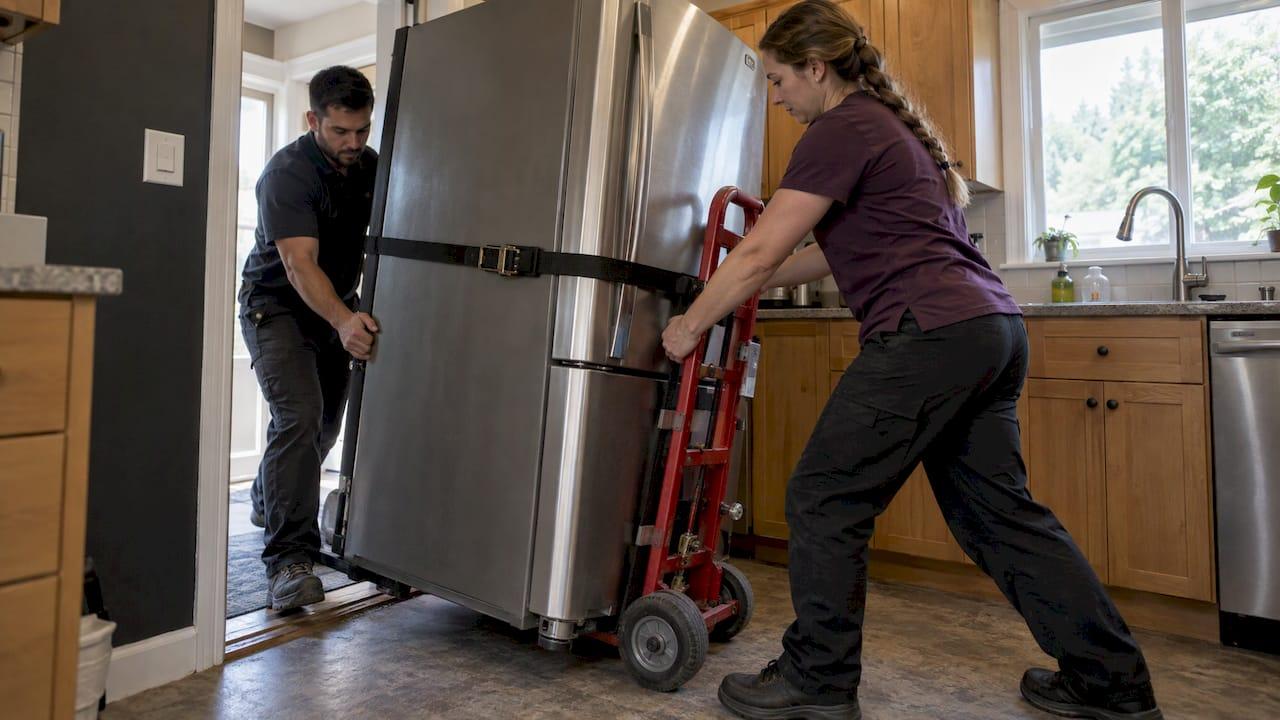
Yes. Professional movers carry refrigerators, freezers, washers, dryers, dishwashers and stoves as part of a normal household move. The part that trips people up is not the lifting. It is the work on either side of it: shutting off water, defrosting, disconnecting gas or power lines, and making sure the appliance is ready to go when the crew arrives. Get that sequence right and appliances are one of the easiest things on move day. Get it wrong and you lose an hour of paid time to a leaking hose.
At 2 Friends Trucking & Moving, we handle residential, apartment, condo, local and long-distance moves in Abbotsford, Mission, Maple Ridge, Langley and the rest of the Fraser Valley. This guide covers what to expect for each major appliance and how to prepare, so your crew can load quickly and nothing arrives damaged.
TL;DR
- Movers routinely transport fridges, freezers, washers, dryers, dishwashers and stoves. Tell them which appliances are coming, with model sizes, when you ask for a quote.
- Preparation is yours to finish before the crew arrives: defrost and dry the fridge, drain the washer and any water lines, and clear the path.
- Gas lines and hard-wired connections are work for a licensed tradesperson, not for you or a general moving crew.
- Appliances are heavy and awkward. They need two or more people, proper dollies and straps, and a plan for stairs and doorways.
- Cost depends mostly on time on the job, so a prepared, accessible appliance keeps your bill down.
Table of Contents
- Which appliances do movers usually take?
- Who disconnects the washer, dryer and fridge?
- How to prepare each appliance
- Why the crew size and equipment matter
- What to tell your movers before the quote
- What does it cost to move appliances?
- Which kind of move suits your situation?
- Moving appliances with us
- Our view on appliances
- FAQ
- Sources
Which appliances do movers usually take?
In a household move, the usual list is:
- Refrigerators and upright or chest freezers
- Washing machines and clothes dryers
- Dishwashers (freestanding or removed from their cabinet space)
- Ranges, stoves and wall ovens that have been disconnected
- Microwaves, countertop appliances and small kitchen equipment
- Window air conditioners and portable dehumidifiers
Small appliances travel boxed with the rest of your kitchen. If you are packing that room yourself, our step-by-step kitchen packing guide shows how to cushion blenders, toasters and glassware so they arrive in one piece.
Large appliances are different. They are heavy, top-heavy and fragile on the inside, which is why a mover treats them as their own category. Built-in units, such as a wall oven or a cabinet-integrated dishwasher, need to be detached from cabinetry and utilities first. Anything you are unsure about should be raised before the quote, not on the morning of the move.
Who disconnects the washer, dryer and fridge?
This is the question that causes the most confusion, and the honest answer is that it depends on the type of connection.
Simple connections are the water hoses on a washer or the supply line to a fridge ice maker. Closing the valve, disconnecting the hose and draining it is something most households can do the night before. Home Depot Canada's moving guide suggests calling a professional to disconnect or install washers, dryers, ice-making refrigerators and dishwashers, and it suggests considering a plumber or electrician about two weeks before the move so you are not scrambling for an appointment.
Gas appliances and hard-wired units are different. A gas range or gas dryer should be disconnected and capped by a licensed gas fitter, and reconnected the same way at the new home. The same goes for a hard-wired electric range or a dishwasher wired directly into the house. In British Columbia, gas work is regulated, so book the tradesperson as soon as you have your moving date. This is a safety step, and it is one of the few jobs where the right person is a licensed professional rather than the moving crew.
A practical way to split it:
| Appliance | Before the crew arrives | At the new home |
|---|---|---|
| Refrigerator | Empty, unplug, defrost, dry | Position, wait, then plug in |
| Freezer | Empty, unplug, defrost, dry | Position, wait, then plug in |
| Washing machine | Shut off water, drain hoses, secure the drum if the manufacturer calls for it | Reconnect hoses and level |
| Electric dryer | Unplug, clean the vent hose | Plug in and reattach vent |
| Gas dryer or range | Licensed gas fitter disconnects and caps the line | Licensed gas fitter reconnects and tests |
| Dishwasher | Shut off water, drain, disconnect | Reconnect or have it installed |
Check the manual for each model. Front-loading washers in particular often come with transit bolts or a drum lock, and the manufacturer's instructions are the final word on how to secure them.
How to prepare each appliance
Preparation is where you save the most time and avoid the most damage. A useful benchmark is the pre-move booklet the Department of National Defence gives to families on military relocations. It tells them to defrost and wash refrigerators and deep freezers, drain water from all appliances, and leave doors open to air-dry for 24 hours before loading. The same routine works for any move.
Refrigerators and freezers
- Empty it completely. Plan your meals so the contents run down in the week before the move. Pack what is left in coolers on the day.
- Unplug it at least 24 hours ahead. Centris, the Ontario real estate board, recommends the same 24 hours, and Home Depot Canada's guide suggests defrosting about two days before.
- Catch the meltwater. Lay towels at the base and expect more water than you think, especially from a freezer.
- Wash and dry the inside. Leave the doors open so no moisture or odour is trapped. Moving crews often tape or strap doors shut for transport, so a dry interior matters.
- Remove loose shelves and drawers and pack them separately so they do not crack in transit.
- Turn off the ice maker and water line well before the move.
At the new home, a fridge that travelled upright can usually be plugged in after it has stood for a few hours. If it was tilted, the oil in the compressor needs longer to settle. Check the manufacturer's instructions for the exact waiting time on your model.
Washers and dryers
Drain the washer by running the hoses into a bucket or basin, and let the drum dry with the door open. Coil and secure the power cord and hoses so they do not hang loose. For the dryer, unplug it, clean out the lint trap and tape the cord to the back panel. Keep the small parts, such as hose clamps and transit bolts, in a labelled bag taped to the machine so they go to the new address with it.

Stoves, ovens and dishwashers
Clean the interior, remove racks and glass inserts and pack them separately. Disconnect gas or hard-wired units through a licensed tradesperson as above. For a dishwasher, shut off the supply and drain the lines. Secure the door so it cannot swing open on the dolly.
Why the crew size and equipment matter
Most full-size fridges are in the range of 200 to 400 pounds, and a washer or a range is not far behind. They are top-heavy, narrow at the base and awkward on stairs. That is why moving crews work in teams with appliance dollies, ratchet straps and furniture blankets, and why each person calls out their moves to the other.
Can one person move a refrigerator with a dolly? On a flat, short run it is physically possible, but a single person has no one to stop a tilt on a step, a door frame or a ramp. Two or more people turn a risky lift into a controlled one. If you are moving heavy household items, our guide to moving heavy furniture safely explains the gear and technique, and the same principles apply to appliances.
A few access details change how long an appliance takes:
- Doorway and hallway width. Measure the appliance and the narrowest point on the path. Taking a door off its hinges can gain you the last centimetres.
- Stairs. A fridge going down a flight of stairs takes time and more hands. Tell your movers about stairs, elevators and walk-ups upfront.
- Elevators in condos and apartments. Many buildings require you to book the elevator and protect the walls. Ask your property manager early. Our guide to preparing for movers in Canada explains how unreserved access can delay a move.
- Parking. A truck that has to park far from the door adds minutes to every trip.
If you are protecting a high-value appliance during a longer trip, the same principles behind this shipping fragile items guide apply: cushion it, immobilize loose parts and keep it upright where the manufacturer asks.
What to tell your movers before the quote
A mover can only plan for what they know. When you ask for a quote, list:
- Each appliance by type and approximate size, plus the model number if you have it
- Whether any are gas, hard-wired or built in
- Whether a tradesperson has been booked to disconnect and reconnect them
- The floor level at both addresses, and whether there are stairs or an elevator
- Any narrow doorways, tight corners or steep driveways
- Whether you want the appliances moved room to room within the home, or only loaded onto the truck
The Department of National Defence booklet reflects the same division of responsibility, with the customer making major appliances accessible for servicing on load day. Even outside a military move, an accessible, disconnected and dry appliance is the one that loads fastest.
If you are unsure what a crew will or will not take, our list of what movers won't move helps you sort items before the day. And if a furniture piece or fixture needs to come apart first, see our guide to furniture disassembly before a move.
What does it cost to move appliances?
There is rarely a separate price tag for a single appliance in a full household move. Local moves are generally charged by time and crew, so appliances add to the total through the minutes they take to load, carry and place. ViewHomes' 2026 moving statistics article notes that local moves are priced hourly and long-distance moves by weight and distance, and that costs rise at month-end, on weekends and from roughly May through September.
For a sense of scale, Centris reports that a one-bedroom apartment move often costs under $1,000, with two movers running about $120 to $180 per hour. That is a published guide for Ontario and Quebec, not a quote for the Fraser Valley, and it is not a figure that we charge. Your price depends on distance, volume, access and the services you add.
Three things keep appliance time down:
- Have every appliance emptied, drained and disconnected before the crew arrives.
- Clear a straight path from the appliance to the door.
- Book your elevator or parking in advance.
For a fuller picture of how hourly and flat-rate pricing work, read how moving companies charge.
Which kind of move suits your situation?
- Students and renters in apartments. Usually a small fridge or a stacked washer and dryer, often with an elevator. Book the lift and measure the stairwell.
- Families moving house. The full set: fridge, freezer, washer, dryer, range. Book your gas fitter early and confirm which appliances stay with the sale.
- Condo owners. Check building rules for elevator bookings and protection requirements. Our Furniture Movers page covers heavy items in apartment and condo moves.
- Long-distance moves within BC. Appliances on a longer drive need to be secured upright and strapped. Long-distance moves are priced differently from local jobs, so share your inventory early.
- Businesses. Break-room fridges, microwaves and kitchen equipment move with an office relocation. See our commercial and office moving service.
Moving appliances with us
We provide residential, apartment, condo, local, long-distance, office and storage moving, along with packing, loading and unloading, and furniture moving, across Abbotsford, Mission, Maple Ridge, Langley and nearby Fraser Valley communities. If you want the heavy items handled by a crew that plans the move with you, send us your list, including the fridge, washer and dryer, and we will plan around it. Start on our moving services page or with local moving in Abbotsford.

If you also want the packing taken care of, our packing services cover the boxes so you can focus on your appliances and the rest of your checklist.
Our view on appliances
Most appliance problems we hear about were decided before moving day. A fridge that was still damp, a hose that was never drained, a gas range nobody had booked a fitter for. The lifting is the easy part when the plan is in place.
Our approach is built on clear communication and careful planning. Tell us what you have, where it is and how we will get it out, and we can plan the truck, the crew and the order of loading around it. That is how a move stays calm, and it is why we ask the questions about stairs, elevators and doorways before the day, not during it.
If you are working through a longer to-do list, our house moving checklist lays out the weeks before the move, and you can log your large items there so nothing is missed.
Jack W.
FAQ
Do movers disconnect the washer and dryer?
It depends on the connection. Draining hoses and unplugging an electric unit is usually done by the owner the night before. Gas dryers and hard-wired appliances should be disconnected and reconnected by a licensed tradesperson. Raise it when you request your quote so the plan is clear.
Can one person move a refrigerator with a dolly?
It is possible over a short, flat distance, but it is risky. Fridges commonly weigh 200 to 400 pounds and tip easily on stairs and thresholds. Two or more people with an appliance dolly and straps make it safer for you and for your floors.
How long before the move should I unplug the fridge?
At least 24 hours. Centris advises unplugging 24 hours ahead, and Home Depot Canada's guide suggests defrosting about two days before. Leave the doors open so the inside dries fully before loading.
How much does it cost to move a fridge?
In a full household move, the fridge is part of the total job, which is mostly driven by time, distance and access. Tell your movers about stairs, elevators and the appliance size so the quote reflects the real job.
Sources
- Pre-Move Information Booklet, Department of National Defence (May 2024)
- Moving day guide, Home Depot Canada
- How to plan your residential move effectively, Centris (2024)
- Moving Statistics Canada 2026, ViewHomes
- Shipping fragile items overseas guide