
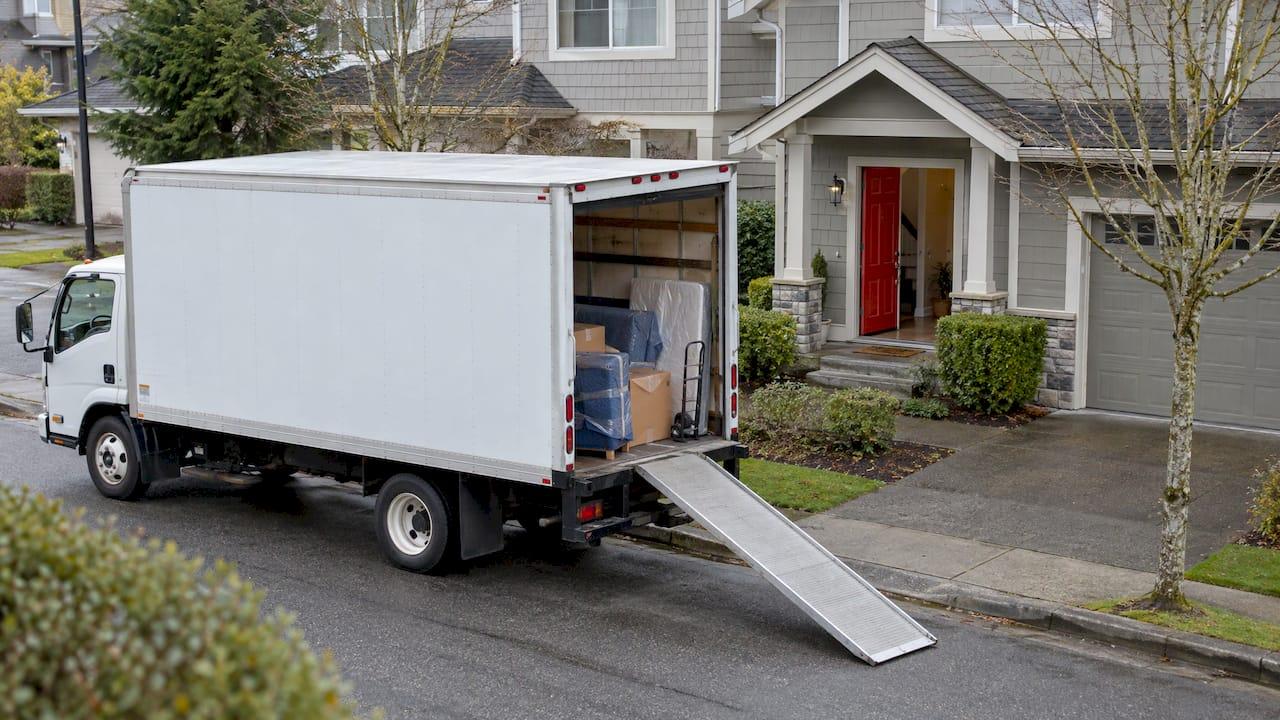
A good moving day runs in six stages: a confirmed start time the day before, a ready home when the crew arrives, a walkthrough and inventory before loading, loading, the drive, and unloading with a final check at the new place. Most delays come from what is not ready at the start, not from the lifting. If you book a crew in Abbotsford or the Fraser Valley, our movers handle the loading, driving and unloading, so your job is to have the day set up for them. This guide shows the timeline step by step, with the checks that matter at each point.
TL;DR
- Reconfirm your arrival time with the movers the day before, and tell them about anything that has changed, such as unfinished packing or bad weather in the forecast.
- Have everything packed, labelled and ready before the crew arrives. Waiting can mean being charged for time the movers are kept from their work.
- Keep documents, medications, jewellery, wallet and phone with you, not on the truck.
- Walk through both homes with the crew lead, and check closets, cupboards and behind doors before the truck leaves.
- At the new home, be present for unloading, inspect furniture before you sign the invoice and note meter readings at both addresses.
Table of Contents
- What a moving day is, and what a plan needs to cover
- The day before: lock in the details
- A sample moving day timeline
- What to do on your first evening in the new home
- What can change your timeline
- Moving day for different movers
- Perspective
- Let us run the day for you
- FAQ
- Sources
What a moving day is, and what a plan needs to cover
Moving day is the day the movers load your belongings, transport them and unload them at the new address. For a local move in Abbotsford, Mission, Langley or Maple Ridge, it is usually one continuous day. For a long-distance move within BC, the loading and the delivery can fall on different days, which changes some of the steps below.
A moving-day plan answers four questions:
- When does everyone arrive? The crew, you, and anyone else who needs access, such as a building manager.
- What is ready? Boxes sealed, furniture prepared, the fridge empty, items you are keeping set aside.
- Who decides things on the spot? One person, you or someone you name, who can answer the crew lead's questions at each home.
- What happens at the end? Final walkthrough, paperwork, payment, keys.
The weeks of packing and booking before this are covered in our 8-week house moving checklist. This page starts at the day before.
The day before: lock in the details
The Canadian Association of Movers (CAM) recommends contacting your mover the day before to reconfirm the arrival time and report anything that has changed, such as packing that is not finished or bad weather in the forecast. A short call or message now lets the crew bring the right number of people and the right protection.
Then work through this list:
- Finish packing. CAM suggests packing the remaining kitchen, bedroom and bathroom items the day before and leaving boxes open for last-minute items. If you need help finishing, we offer packing services in Abbotsford.
- Empty and clean the fridge and freezer. CAA-Quebec advises doing this the day before and preparing a cooler to keep food fresh.
- Sort items movers cannot take. Cleaning products, propane and similar items are often refused. Our guide on what movers won't move lists what to sort out in advance.
- Prepare a "first night" box or bag. Toiletries, chargers, a change of clothes, basic tools, bedding, pet supplies and snacks. Keep it with you.
- Plan for pets and children. A closed room or a sitter keeps them safe from open doors and heavy furniture. See our plan for moving with pets.
- Book the building. In an apartment or condo, confirm the elevator reservation and any loading-bay or parking rules with your property manager or strata. Our apartment moving checklist covers the building side.
- Protect the floors. Know where the crew will walk, and what covering they will use. Our guide on protecting floors when moving explains what to expect.
A sample moving day timeline
Every move differs in size, distance and access, so the clock times below are an illustration of the order of events, not a promise of how long each step takes. For how long a crew typically needs for different home sizes, see our guide on how long movers take in Canada.
| Stage | What happens | What you do |
|---|---|---|
| Early morning | Last checks at the old home | Final pack of the bedding and toiletries, strip beds, set aside the items you are carrying yourself |
| Crew arrival | Introductions and walkthrough | Meet the crew lead, point out fragile items and anything not moving |
| Loading | Furniture wrapped, boxes carried, truck loaded | Stay reachable, answer questions, keep pathways clear |
| Final sweep | Last look at the old home | Check closets, cupboards and behind doors, take meter readings, lock up |
| Drive | Truck travels to the new address | Travel separately with valuables and your essentials bag |
| Unloading | Boxes and furniture go to rooms | Direct placement, check items off, inspect furniture |
| Close-out | Paperwork and payment | Review the invoice, sign once satisfied |
Early morning: set up for the crew
Get up early enough to be finished, not still packing. Strip the beds, pack the last bag and set aside everything that stays with you. Take down curtain rods or wall mounts you plan to take. Move your own car out of the driveway, or whichever spot the truck will need.
CAA-Quebec says to keep important documents, jewellery and valuables with you. The federal Office of Consumer Affairs gives the same advice: carry valuables yourself, such as your cellphone, wallet and jewellery. Add passports, medications, laptops and the keys to both homes.
Tape or mark anything that must not go on the truck. A closet door taped shut with a note saying "stays" prevents a mix-up better than a verbal reminder.
Crew arrival: the walkthrough
When the crew arrives, meet the lead and walk through the home together. CAM's timeline advises you to identify the person in charge and stay on hand to supervise. Use the walkthrough to cover:
- Which rooms are loaded first and which furniture needs disassembly.
- Fragile or high-value items: pianos, artwork, glass tabletops, TVs.
- The route out, including stairs, narrow hallways, elevators and any tight turns.
- Where the new home is and any access limits there, such as a steep driveway, a long carry or a building's booking window.
- A phone number where you can be reached at all times.
Have your belongings ready at this point. The federal Office of Consumer Affairs notes that if movers have to wait, you can be charged for the time they are kept from required work. Our guide on preparing for movers explains how blocked access and unready rooms slow a move down.
Loading: stay out of the way, but stay close
Loading is the stage where the crew does the work and you keep the home organized around them. Keep doors propped or unlocked, hallways and stairs free, and children and pets contained. If a decision comes up, such as whether a shelf unit can be taken apart, you need to be reachable.
For long-distance moves, the Office of Consumer Affairs notes that provincial transportation regulations require an inventory before belongings are moved, and that good practice means items are tagged and listed, with a copy given to the customer. Ask for your copy before the truck leaves. For local moves it is still smart to keep a simple count of your boxes and the key furniture pieces, so you can check them off at the other end.
If you want to understand what protects your belongings in transit, read our overview of moving insurance in Canada.

Final sweep: before the truck leaves
This is the stage people skip, and it is the one that prevents the most regret. CAM advises you to check closets and behind doors before the crew departs. Go room by room with the crew lead:
- Open every closet, cupboard, drawer and the oven.
- Check the garage, shed, balcony, attic, basement and crawlspace.
- Look behind doors and in the corners of the rooms.
- Take meter readings. CAA-Quebec recommends electricity and gas readings at both homes on moving day. A phone photo with the date is enough.
- Turn off lights, close windows and lock up.
CAM's timeline also says to allow half an hour between homes on a local move or same-day delivery, to close up the old place and reach the new one. Build that buffer into your plan, especially if a building has a booking window at the other end.
The drive
The truck goes to the new address, and you travel separately with your valuables, documents, medications and essentials bag. Reach the new home before the truck or with it, so the door is open and the crew does not wait. For long-distance moves in BC, the loading and delivery can fall on different days, so confirm the delivery window and who you contact if the plan changes.
Unloading: be there and direct the placement
CAA-Quebec's guidance is to be present while the truck is unloaded and to use a floor plan to help place belongings. A simple version works: tape a room name to each door, and give the crew lead a sketch showing where the big furniture goes. Boxes labelled by room go straight where they belong, which saves you hours later.
A few practical points:
- Have the new home empty, clean and accessible before the truck arrives. Cleaning, painting or repairs left undone cost time on delivery day.
- Protect the floors and entry points, and tell the crew about any fragile finishes.
- Check boxes and furniture off your list as they come in.
- Put beds together first. It is the one job you will want done before you are exhausted.
Close-out: inspect, then sign
Before you sign the invoice, look over your furniture. CAA-Quebec advises you to inspect furniture before signing the invoice. If you find damage, point it out to the crew lead right then, photograph it and make sure it is noted on the paperwork. Review the final charges against what you agreed. Then settle up and collect the keys and any copies of paperwork.
What to do on your first evening in the new home
You do not need to unpack. Aim for a home that works for the night.
- Appliances: CAA-Quebec says to wait a few hours before plugging in appliances, especially the fridge, after they have been moved.
- Beds and bathroom: make the beds, put out towels and toiletries.
- Safety: check that smoke alarms work and that you know where the main water shut-off and breaker panel are.
- Locks and keys: confirm that all keys work, and think about changing locks if you are not sure who else holds one.
- Pets: set up one quiet room with their familiar things.
- A simple meal: having a cooler or a takeaway planned avoids hunting for the kettle in a box.
What can change your timeline
The same crew can finish a one-bedroom apartment move faster than a four-bedroom house, and several factors move the clock:
- Home size and amount of belongings. More rooms and heavier items mean more loading time.
- Access. Stairs, a long carry from the door to the truck, narrow hallways and limited parking add time at both ends.
- Building rules. Elevator bookings and loading-bay windows in apartments and condos can set a hard start and end time.
- Packing readiness. Open boxes, half-emptied drawers and unlabelled items slow the crew.
- Distance. Moves within Abbotsford, Mission, Langley and Maple Ridge are short drives. Long-distance moves within BC add travel time, and delivery can be on a later day.
- Specialty items. Pianos, large safes and big appliances need extra equipment and planning, so tell us about them when you book.
- Weather. Rain on a Fraser Valley winter day means more floor protection and more care on steps.
Tell your movers about anything on this list before the day. It is the reason for the day-before call.
Moving day for different movers
Apartments and condos
The booking window is your clock. Reserve the elevator and loading bay at both buildings, confirm the hours, and ask whether a damage deposit or insurance certificate is needed. If you have a student move with a small load, the same planning applies: confirm parking and the door-to-door route.
Families
Assign one adult to the crew and one to the children, or arrange a sitter. Keep each child's comfort items and school things with you. Keep snacks and water handy through the day.

Offices and businesses
Plan the move around the working day. Label every workstation and room, tag IT equipment, and name one person on the moving day as the decision-maker. We handle commercial and office moves for businesses in Abbotsford and nearby communities.
Long-distance moves within BC
Ask for the inventory copy before departure, confirm the delivery window and keep a phone line open for the driver. Our long-distance moving service covers moves within BC.
Perspective
Moving day goes well when the first twenty minutes go well. Reconfirm the day before, have the home ready, and give the crew lead one clear point of contact. Those three things do more for the schedule than any amount of extra effort once the truck is loaded.
We built our service around clear communication and careful planning for people moving in Abbotsford and the Fraser Valley. In practice that means we want to know about the stairs, the elevator booking, the piano and the narrow hallway before the day, not on it. The more you tell us, the better the crew can plan, and the less you have to manage on the day.
If you would like to hand over the heavy parts, we offer packing, loading and unloading, furniture moving and storage moving. Tell us what you need and we will plan the day around it.
Jack W.
Let us run the day for you
We move households and businesses across Abbotsford, Mission, Maple Ridge and Langley, with local moves, long-distance moves within BC, packing, loading and unloading, furniture moving and storage moving. If you want a plan for your own day, request a quote and we will walk you through the timeline for your home and your building.

We also serve Mission and Maple Ridge, and our local moving page covers the short-distance moves most people book.
Before you book, our list of questions to ask movers helps you compare quotes properly.
FAQ
What should I do first on moving day?
Take meter readings, strip the beds, pack your essentials bag and set aside valuables and documents that stay with you. Then meet the crew lead and walk through the home together. Keep your phone on you all day.
How long does moving day take?
It depends on the size of your home, access at both ends, building rules and distance. Short local moves are usually completed in a day, and long-distance moves can run over more than one day. Our guide on how long movers take gives ranges by home size.
Do I need to be there while the movers work?
Yes, or name a trusted person who can decide for you. CAM advises you to supervise the move, and CAA-Quebec recommends being present at unloading. The crew lead will have questions at both homes.
What should I carry myself instead of putting on the truck?
The Office of Consumer Affairs says to carry valuables such as your cellphone, wallet and jewellery. Add documents, medications, laptops, chargers and the keys to both homes.
What should I check before the movers leave the new home?
Check that all boxes and furniture are in, and inspect furniture before you sign the invoice. Note meter readings and make sure any damage is recorded on the paperwork while the crew is still there.
Sources
- Moving advice, Office of Consumer Affairs (Government of Canada)
- A successful move: Guide and key steps, CAA-Quebec
- Moving Timeline, Canadian Association of Movers